 Itamar Assaf
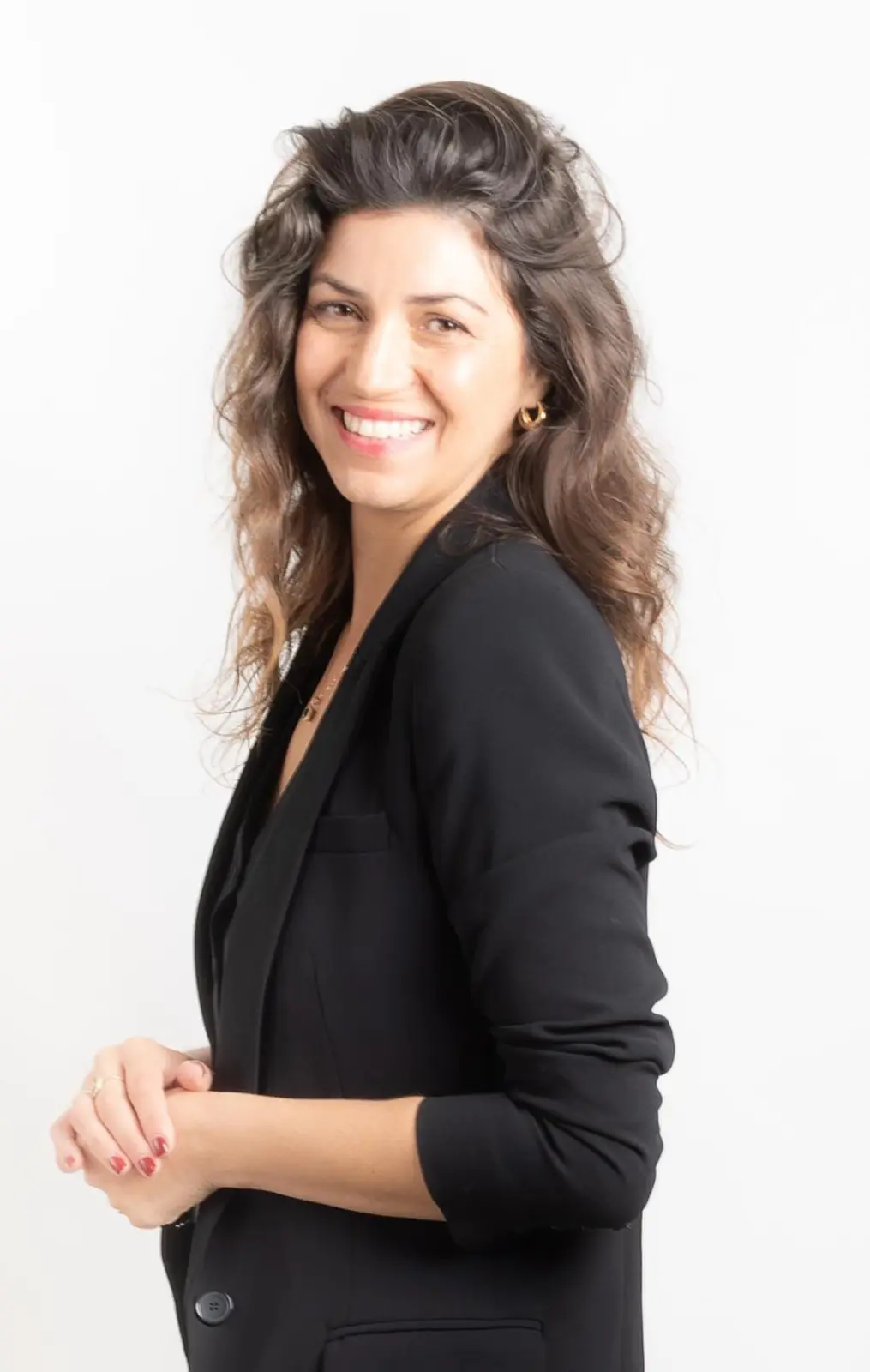
Shooting and sniper instructor, parliamentary adviser and Knesset spokesperson, researcher and lecturer, social entrepreneur and CEO. Dr. Odelia Dayan-Gabay says it sounds like six different women, but they are all her.
Today she is the founder and CEO of the Israeli Center for Gender Consulting and Social Diversity, and she works on one thing: turning gender equality in the workplace from a box to tick in a report into a daily practice that reaches the bottom line. "I translate values into reality," she says.
A base without a base: where the flexibility came from
In the army, while her friends served their whole service at one base, Odelia found out every Friday where she would be next week, with whom and in front of which audience. Once they arrived to train soldiers and found an empty base about to close. Every day, another part of the classroom they slept in was taken apart.
"When there's no ceiling, you can cry about it, or you can say, wow, from here you can see the stars." That, she says, is where the tools that still guide her came from: flexibility, improvisation and the ability to connect with people fast.
"Every organization is a new base," she explains. "Flexibility doesn't mean giving up the message. It means translating it into the language of the people in front of me."
And when she walks into a room full of strangers, she simply goes up to people and asks questions. "People remember who was interested in them, not who told them about themselves. I don't do networking, I build relationships."
The crossroads: leaving one track, not academia
Her big turning point came from inside academia. She was already on the track and knew exactly how to advance. Then her doctoral adviser, Prof. Esther Schely-Newman, passed away just days after Odelia received her PhD.
"In moments like that you realize how short life is," she says. She understood that academia alone doesn't change anything without touching the field, and founded the center. A colleague who had moved to the private sector asked her at the time, "what is gender equality?" "It took a lot of courage, because the conversation wasn't what it is today."
But she didn't leave academia. "I left the single, exclusive track." Today she lectures at the Hebrew University and Ashkelon Academic College, runs a business, writes for Globes and Maariv, and volunteers. That is a portfolio career in the fullest sense: "These worlds don't compete, they feed each other."
When language changes, reality changes
For her doctorate she studied 11 years of media discourse, fieldwork and policy work around Israel's law banning the purchase of prostitution, passed in 2018. Her conclusion is simple: when language changes, reality changes.
In organizations, she says, it starts with the job ad. When you write "programmer wanted" or "VP" in gendered Hebrew, the image that comes to mind is a man, and that affects who applies at all. Then comes everyday language: "girls" instead of "women", and whoever is diminished in language struggles to be seen as a leader.
"The good news is that it's the cheapest thing to change. You don't need a budget, just attention."
Gender equality in the workplace: speaking the language of profit
With a CEO who doesn't connect to the values side, Odelia talks profit. She cites a Peterson Institute study of nearly 22,000 companies in 91 countries: among profitable firms, going from zero women in leadership to 30% is associated with a 15% increase in net margin.
And her favorite finding: a female CEO alone doesn't change much. The profit comes from a pipeline of women at every level of management. In Israel, she notes, women are only about a third of tech employees, a share that has barely moved in three decades. "A CEO who doesn't know how to recruit, retain and promote women is simply giving up a huge part of the talent pool."
That is why she developed her own model, which maps the organization, sets measurable goals with clear ownership in management, and coaches executives until the change shows up in the numbers. "Real change doesn't happen in a report. It happens in the hallway, in the meeting, and in the decision about who gets the next opportunity."
From a client's pain to a national program
"I start from the pain, not the solution." When the CEO of a nonprofit for women of Ethiopian origin asked her where their women were in Israel's public diplomacy, Odelia built a program from scratch: a syllabus, lecturers, hundreds of candidates from across the country, and partnerships with an international organization fighting antisemitism and the Foreign Ministry. That is how "Women Explain Israel" was born, ending with a ceremony at the Foreign Ministry.
Her calendar for promoting gender equality and social diversity in Israel, now in its fourth edition, also came from frustration. Organizations invited her only on International Women's Day. "How don't they understand it's not a matter of one day a year, but every day of the year?" Today organizations buy it as a gift for employees, and it taught her something about revenue: "A lecture ends after an hour. A product keeps working even when I'm not in the room."
October 7: what the research found
Her latest study examined how Israeli media covered the sexual violence of October 7. She found two trends at once. On one hand, real change: the media did not doubt the survivors, and adopted language that named the global denial for what it was. On the other, old patterns remained, such as portraying women mainly as passive victims.
Her message to journalists and spokespeople: keep believing survivors even when the harm has nothing to do with war, don't look for graphic details, and make room for sexual violence against men too. "Every word matters."
How does she keep her strength facing such material? "I protect my mind on purpose." She has her "fuel stations": home, the women's basketball team she founded in Gan Yavne, and volunteering with the Israel Nature and Parks Authority, heading out at 5 a.m. to scan Ashdod's beaches for sea turtles.
"There's no such thing as impossible"
When she suggested to the Hapoel Savyonim Gan Yavne coach that they start a women's basketball team, he laughed. "I didn't ask him to approve the idea, I brought women." Five years later, the team is still playing.
Her advice to anyone who meets laughter the first time: "Don't argue with the laughter, bring partners. An idea with people behind it is hard to cancel." For another career built between the public sector and independent work, read also about a portfolio career over 50.
Women in tech: what you can do tomorrow
Together with Tali Glicksman she unveiled "Women in Technology 2035", a national plan with 24 commitments. But, she says, a company doesn't need to wait for legislation. She recommends four steps: measure women's attrition, check and close pay gaps, build a return path from maternity leave, and set a target for women in technical management.
Under the plan, the target is 35% women in technical management by 2035, more than double today's share. "Whoever starts now will be ready when it comes."
What Odelia is looking for from the community
Odelia would be glad to sit down with CEOs, HR leaders and entrepreneurs: to lecture on gender-aware management, build a strategic plan, or help recruit more women into management and technical roles. She is also looking for partners for social ventures, and for people with an idea they don't yet know how to make real.
More conversations like this one: all interviews and articles from the Lost in Y blog.
Dr. Odelia Dayan-Gabay's profile in the community member directory