 Itamar Assaf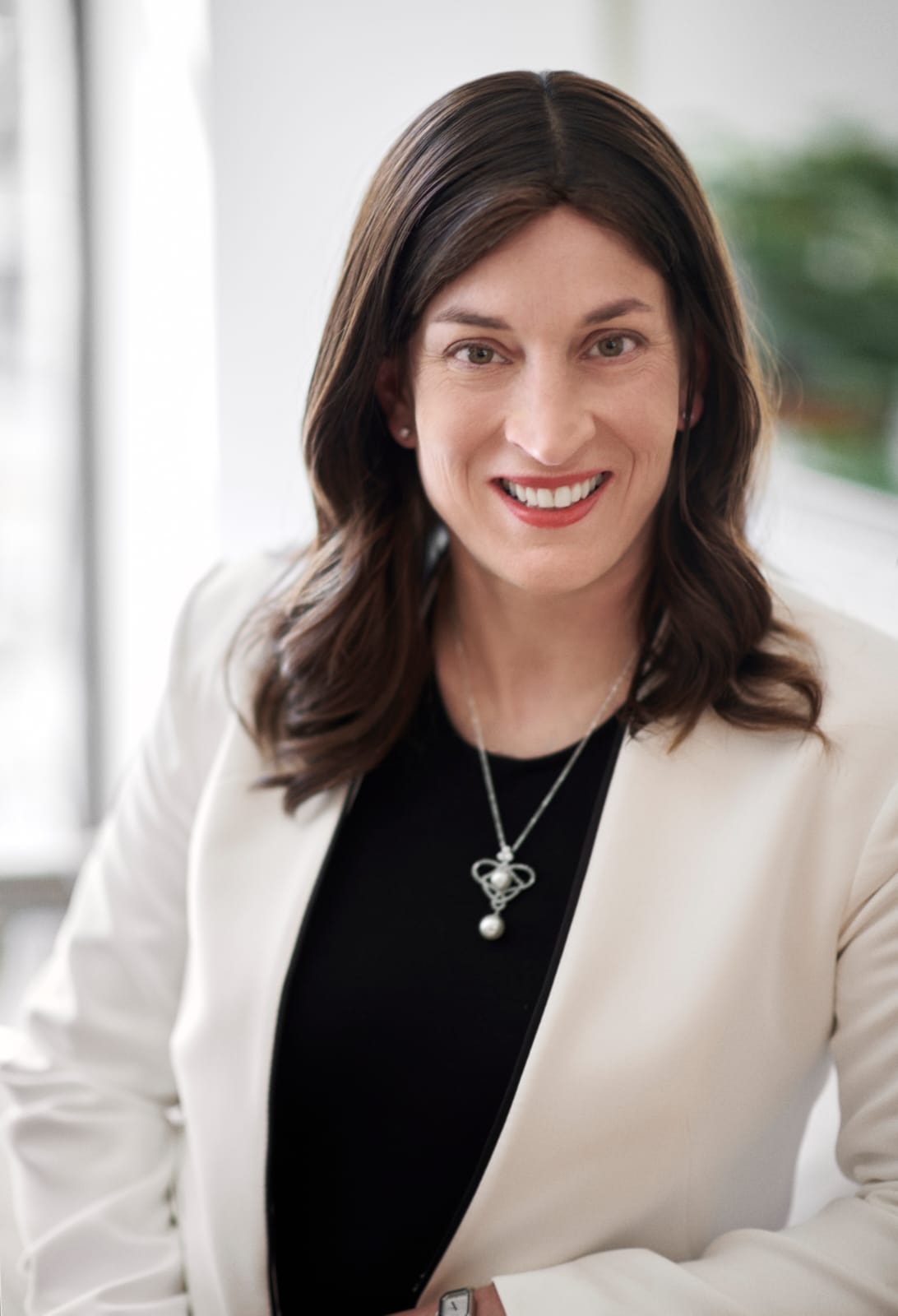
Rivka Ravitz planned almost none of her career stops. She dreamed of being a teacher, entered the Knesset as a two-month fill-in, and stayed 22 years, all the way to chief of staff to the President of Israel. Her secret is not a plan but the ability to spot an opportunity the moment it appears, even when it arrives as a door closing. Today, at 50, she is applying that same ability to herself, building a portfolio career over 50 of lecturing, consulting, writing and project management.
From Chalk and Blackboard to the Knesset
Rivka Ravitz is 50 and lives in Kiryat Ye'arim, a Haredi town just outside Jerusalem where her husband, Yitzhak, heads the local council. She is a mother of 12 and a grandmother of 14. Ask her for a title and she answers: "Grandmother, author, lecturer, consultant and project manager."
She grew up in a small, crowded Haredi home with two bedrooms. "We had no money, but we had a happy childhood. Very happy." At seven she dreamed of being a teacher, "the simplest thing, chalk and a blackboard," and studied at a teachers' seminary, because that is what girls at Beit Yaakov did.
At 18, newly married, she entered the Knesset to fill in for two months for the parliamentary aide of her father-in-law, the late Rabbi Avraham Ravitz. The two months became 22 years.
The Door That Closed and Opened the Way
A year after she arrived, a law was passed banning the employment of relatives in the Knesset. "Of course I cried," she says. After learning to navigate the endless corridors, in the Haredi party and the Finance Committee, she had to start over in the Likud faction with a new Knesset member. "It was very challenging and tough. But that is how I met Rivlin, and that is where my big growth came from."
She became bureau chief to Reuven Rivlin when he served as Speaker of the Knesset, in 2003 and in 2009, and ran his campaigns. In 2014, when he was elected President, she became his chief of staff at the President's Residence for seven years. The first woman in Israel in that role, and possibly the first in the world. "If the President is citizen number one, the chief of staff is civil servant number one."
A Management Language Born at Home
How do you break a double glass ceiling, as a woman and as a Haredi woman, inside a formal, male-dominated system? Her answer is disarmingly simple: her management language was built at home. "Anyone who has to run the cleaning, the shopping, the cooking and the hosting for a home like that already has a completely different management language."
She does not hide that she also had support. Her father-in-law believed in her, and in breaking moments, when she came to put her keys on his desk, he told her: "Rivka, you eat this challenge for breakfast. Don't fall." Rivlin promoted her from role to role, "without caring that I gave birth almost every year and was hardcore Haredi. He looked only at the skills and abilities."
And how do you do all that with 12 children, a bachelor's, a master's and a PhD, plus a book, "Em VaAretz," published in 2023? "From the third child on, it gets easier," she laughs. Seriously: she wakes between four and five in the morning, delegates, and clears out noise, "emotional noise too." Anything that drains energy for nothing is removed from her life.
The Opportunities Along the Way
The role took her into rooms few people enter. She met a Pope, flew in rickety helicopters in India, and her greatest fear, elevators, came true when she got stuck in one with the President. At the White House, when U.S. President Joe Biden heard she has 12 children, he knelt before her and told her he had to tell her about his mother, who admired large families.
From all of these moments she came away with one insight: "There are no special people, no one above everyone else. Everyone is human, everyone has urges, loves, anger, hurt feelings. What makes a person special? Whether they know how to overcome their urges and emotions and achieve their goals."
Haredi Employment Integration: What Needs to Happen
Rivka is living proof that a woman raised in Beit Yaakov can reach the top of the state system without giving up who she is. Asked how to bring more Haredi men and women into these systems, she sends a message to both sides.
To employers: "Recruiters need to stop believing in superstitions and preconceived stigmas. Maybe we need to move to blind interviews?" And to the Haredi public: "Haredim also need to want to have more influence, and live less inside the bubble. The civil service and the Knesset are an important place to have influence from."
When the Phone Stops Ringing
On the day she left the President's Residence, after seven years in which she could not eat lunch without a hundred incoming calls, she drove to the beach and left her phone in the car. She was sure she would come back to hundreds of missed calls. "There were only two. My mother and my husband, checking how I was. That is when I understood who really loves me, and that family is the most important thing in life."
Would she have started building her own brand earlier? "I don't regret what I did. In my role I was committed to building the brand of the President's Residence, and it would have been unfair to work on my own brand at that time."
Building a Portfolio Career Over 50 That Works Even in an Emergency
Her first attempt at going independent was three years ago, and then the war broke out and she was left with no income at all. "It was frightening, and I took the first safe public-sector job I was offered." When another crossroads came recently, a role she had hoped for in the philanthropy world that did not materialize, she already knew what she wanted: "I don't want these kinds of jobs anymore, the ones that force me to be an employee and work from seven in the morning to seven in the evening. I am worth more than that."
This time she built a hybrid career based on the lesson of the first attempt. Her principle is simple: choose different, varied fields, some of which work no matter what, even in emergencies. Today she works with organizations, managers and public authorities, guides decision-making processes, and connects the world of public policy with the world of execution and projects. Alongside that, she lectures, writes and manages projects.
The result, in her words: she works less, earns more, and gets far more satisfaction. That is Life ROI in its most tangible form.
What Rivka Is Looking For From the Community
To the seven-year-old who dreamed of chalk and a blackboard, Rivka would say today: "You are right, educating the next generation and influencing people are the most important things we can do with our lives."
Indeed, what she loves doing most today (apart from shifts with Magen David Adom, which she recently started as a volunteer) is lecturing and running workshops. She has built a funny talk on how artificial intelligence algorithms can help you get through a high-intensity life, and she is looking for managers who want to empower themselves and their employees. She is happy to appear in any forum, in Hebrew or in English. If you are organizing a conference, a seminar or a team event, now is the time to reach out to her.
Want the idea behind these stories? Read portfolio career: what it is, who it fits and how to start.