 Itamar Assaf
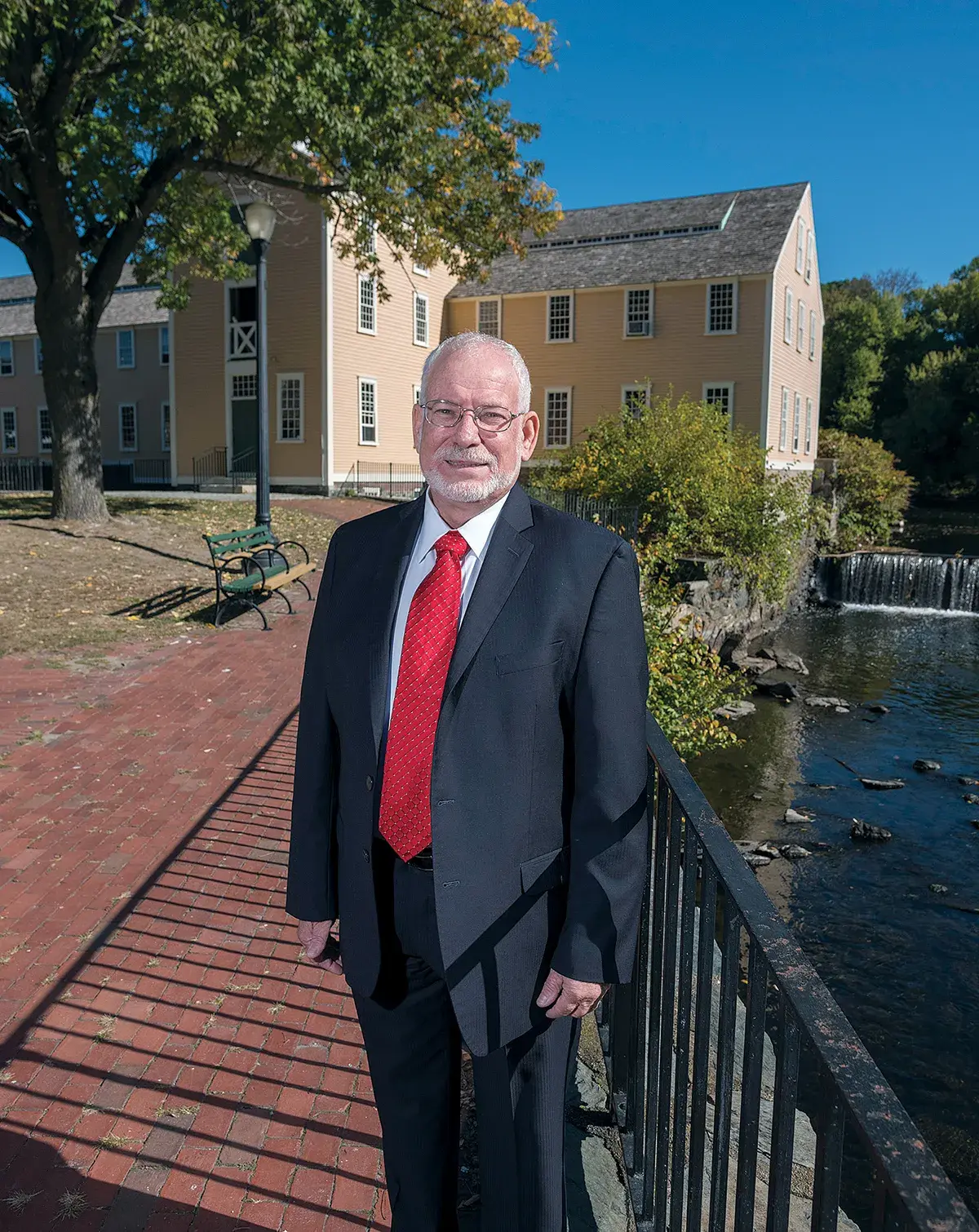
Avi Nevel's story begins in Kiryat Bialik, Israel, with a boy on a bicycle. His mother ran a small shop where customers dropped off their laundry, and he delivered it back to them clean. The older ladies would tip him, sometimes with a candy.
Today he is 73, lives in Providence, and leads the RIIC, the business and academic bridge between Israel and Rhode Island. Along the way he built exports to 67 countries from zero, bought the company he worked for, and sold it 16 years later.
For any Israeli company doing business in the US, his lesson starts on that bicycle: "When you're nice to people, very often, even when you don't expect it, they want to give something back."
The "any job" years
Avi and Laura married at 22. She studied medicine, he studied engineering at Shenkar. To get by, he taught, repaired equipment, pulled nails from planks at construction sites, and sold balloons at festivals in Akko.
One summer he worked as a lathe operator. The job was boring, so he rearranged his entire workstation, and efficiency jumped. The factory owner asked him to stay two more weeks.
"Even in the simplest job you can think, initiate and improve," he says. "The question is how you approach what you do."
"If you'd like to do it, go for it"
They came to Rhode Island for Laura's medical residency. His English wasn't great, American society felt closed, and there were almost no Israelis around. They built their social life almost from scratch.
Avi joined Lawson-Hemphill, a maker of quality-control instruments for the textile industry, as a junior engineer. Four months in, he asked the president why the company wasn't exporting. The answer: "If you'd like to do it, go for it."
He already knew international business from working at Overseas in Israel, which imported knitting machines from Germany and Switzerland. "At worst they say no, and you're exactly where you were before."
The German story: why customer service is king
One of his first sales, in the early 1980s, was to a German company with about 4,000 employees. The president asked why he should buy an American machine when German makers were an hour away. Avi personally promised to take care of him, and he bought a machine for about $100,000.
Two weeks after installation, a call came on a Friday afternoon: the machine wasn't working. Avi flew out on Saturday and on Monday morning stood at the factory gate. "I promised I'd take care of you," he told the stunned president.
The machine was perfectly fine. A German employee, unhappy that the company had bought an American machine, had faked the calibration results. Avi didn't charge a cent for the trip. Six months later came an order for about five machines, worth roughly half a million dollars, with no haggling.
By the time he sold the company, about 75% of its business came from exports, up from almost zero. Along the way he earned 12 patents, and the company won the US Presidential "E" Award for excellence in exporting.
"You didn't ask": buying the company you work for
After about seven years, Avi told the owner: "If you ever decide to sell, I'd like to buy." He always worked, he says, as if the business were his own, even as an employee.
When another senior vice president complained that he hadn't been offered the chance, the owner replied in three words: "You didn't ask."
The acquisition took about a year and a half. Avi and his partner took an SBA loan, guaranteed it personally and mortgaged their homes. "It was a very scary decision," he admits, "but Laura supported me all the way."
Life after exit: from consulting to meaning
After 16 years as owner, he sold the company and founded Nevel International, an international business development consultancy. But something was missing: the customers, the travel, and Friday afternoons with his engineers reviewing new developments.
In 2011 he was asked to help Israel's consul in Boston build connections in Rhode Island. He didn't know everyone, but said "I'm willing to try." In 2016 that grew into the Rhode Island-Israel Collaborative, a nonprofit chamber of commerce focused on business, academia and research.
Engineer, exporter, factory owner, consultant and founder. That is a portfolio career built over five decades.
Ten years without charging a cent
For ten years Avi and the board have done all of this as volunteers. For him it is not a sacrifice. "I don't need to be paid for everything I do," he says. "The satisfaction of being able to help others is my greatest reward."
The connections he is proudest of: linking IBM Alpha Zone in Israel with the Rhode Island state government and Brown University, which led to RIHub, the state's innovation center. And a medical student exchange agreement between Brown and Tel Aviv University.
At home, Avi and Laura have hosted families of Israeli Navy officers studying in Newport for ten years. "You don't always need a big project or a budget," he says. "Sometimes it's enough to open your home and your heart."
The mistake Israelis make in the US market
Avi has worked with many Israeli companies trying to enter the US, and he sees one mistake again and again. "When you go to Japan, you immediately see the culture is different. In the US, Israelis don't always realize Americans are very different too, even though the culture seems familiar."
His advice: respect the time of the people you meet, and show them clearly what value they'll get from the relationship. If you're planning to enter a foreign market, read also how to enter the DACH market.
And for people over 40 wondering whether to ask, request or leap, his advice is simple: consult someone you trust, who will tell you the truth to your face. "Most important is having people in your network who believe in you and support you."
What Avi is looking for from the community
RIIC wants to connect Israelis and Rhode Islanders in business, academia and research. Anyone who'd like to volunteer or join as a member is welcome to reach out through the RIIC website or the organization's LinkedIn page.
And the line he repeats at every board meeting is worth remembering for anyone who connects people: "It's not what we do, but what others do because of us."
More conversations like this one: all interviews and articles from the Lost in Y blog.