 Itamar Assaf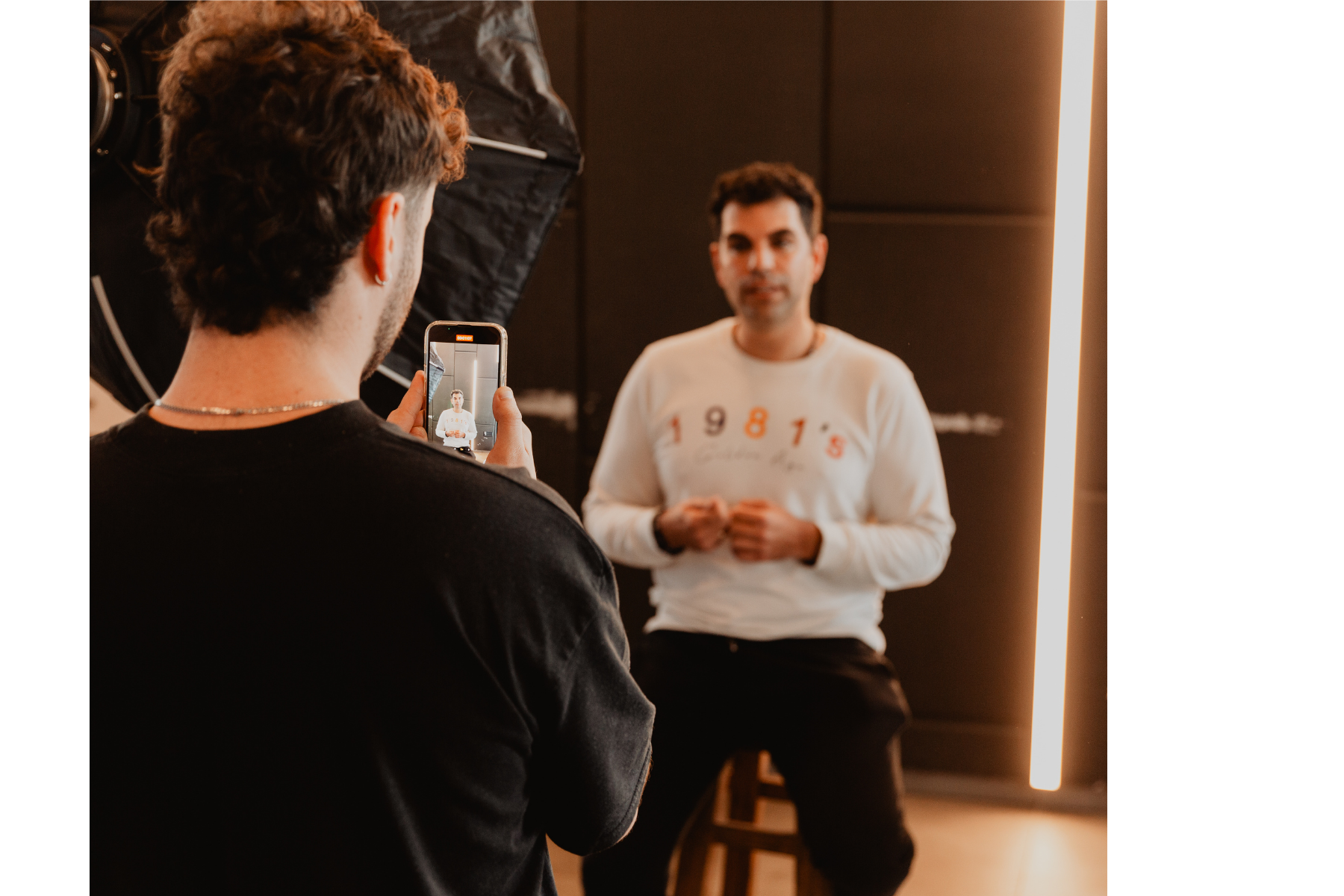
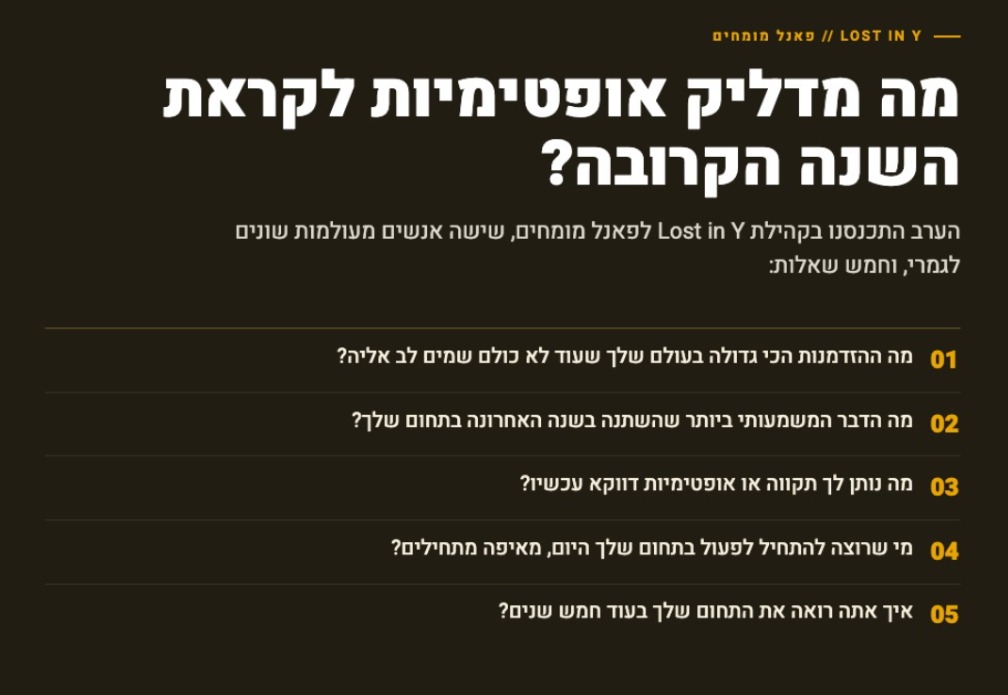
Every Friday, I sit on the other side of the screen and ask questions. This year, for Rosh Hashanah, I flipped the script. I gathered questions you've privately asked me over the past year, and I asked my friend, Omer Yarkovich, to lead the interview. This isn't me in the community role you know, but rather who I am underneath it all.
The Challenge That Stayed With Me Since Age 13
At 13, I sold computer games nationwide. In high school, I transitioned to organizing parties and events. At 24, with no safety net, I invested hundreds of thousands of shekels with partners to open 'Zeh' pub in Ashdod, while also co-founding the 'Ashdodim' movement. Four completely different ventures, all before the age of 25.
The recurring challenge at each stage wasn't what you might expect. It wasn't about money or experience. It was that each venture had its own language, rules, and people, and each time I had to learn them from scratch. My solution wasn't to specialize in one field and stay there. It was to turn the act of relearning itself into a core skill. My military service forged my ability to perform under pressure. The pub taught me cash flow management without a safety net. Each stage built a capability that the next one leveraged. This is why I don't define myself by a single title. I'm a "Growth Architect," a role that adapts to the problem at hand, sometimes a headhunter, sometimes part of the team, sometimes the executor.
Why the Knesset, and Why Boston Changed Everything
From the pub, I moved to the Knesset, serving as spokesperson for Professor Avishay Braverman, Israel Prize laureate and former president of Ben-Gurion University. I had no relevant experience for the role. The challenge was a vast gap between who I was and what the position demanded. I tackled it with determination and creativity, without shortcuts. He became a mentor and close friend, placing me at the forefront of Israeli economics and politics. He taught me that meaningful endeavors, whether business or social, begin with humanity and integrity. This lesson has stayed with me at every stage since.
In 2016, I attended a Fellowship program in Boston. There, I encountered a completely opposite challenge. I found myself working on business ventures with Palestinians from Gaza, Ramallah, and Bethlehem, people I had recently fought against in the field. The challenge was building trust from scratch, without any shared history to build upon. Simultaneously, I was exposed to the local Jewish community in Boston, people who managed massive funds and simply wanted to give back. I observed a whole system of relationship-building there, based on trust rather than money, which simply didn't exist in Israel.
And this is where the real problem became clear. When I returned from Boston, I realized I couldn't find people like me around me, proactive individuals unwilling to limit themselves to a single title. Everyone followed homogeneous paths, and Generation Y felt lost in the employment galaxy. The solution wasn't to search for them. It was to build them a home. From this personal need, the community was born.
What Made Me Different: Not Choosing a Side
Most of my career has been "both/and." I always did everything as an employee, but I always built something of my own alongside it, even when it didn't yield immediate returns. Since high school, I've lived as a combination of a freelancer, entrepreneur, and employee. This wasn't a planned strategic choice. It was simply the only way I knew how to live.
And this is precisely what became my added value. At Onebeat, I was the first marketing hire, with no existing engine whatsoever. The challenge was to build it from scratch, without a template to copy. The ability to move between worlds, the public and business sectors, gave me a perspective most marketing professionals don't have. The skills I acquired in the Knesset as a writer and PR person were what enabled creative marketing initiatives in remote markets, bringing in millions of dollars for the company and boosting ARR to hundreds of percent growth.
The "both/and" approach also comes with a price, and I wouldn't be honest if I didn't say so. No one sees you as a person of a single field, and no entity is entirely sure you belong solely to them. Building the community precisely reflects this struggle I've faced for a decade. I embrace the approach of my friend Roee Lavna, whom I met here in the community: Be pirates. Take what you can, distribute it proportionately among team members, and create your own sovereignty, because we simply don't know where the job market is heading.
The Unignorable Problem: The Cost to Home Life
I'm not perfect, and I write about this precisely to remind myself to implement it. The model of doing everything simultaneously demands a lot of energy, and sometimes it comes at the expense of family time on weekends. There were many moments when the pressure and sacrificing time with my wife and sons created difficulties at home. Anyone who builds a startup or business understands working around the clock, but in retrospect, you realize you need perspective.
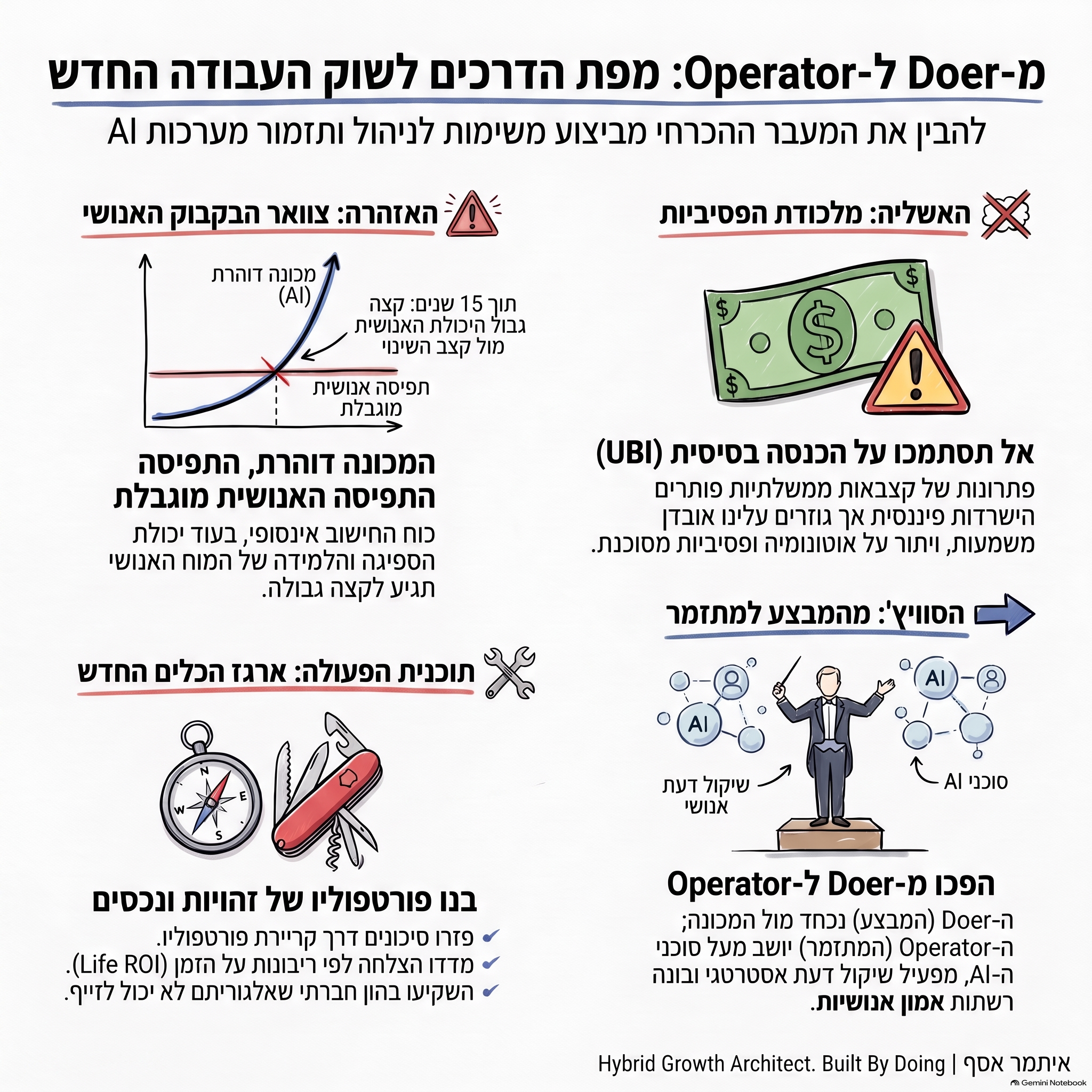
The solution wasn't to stop the pace. It was to redefine what constitutes success. I understood that my personal resilience and the health of my family are the real bottom line, the shift from "Doing" to "Being." This is precisely what has fueled me this past year, as I write about Unbossing and portfolio careers for those 40 and 50+. Seeing people over 50 out of the workforce after 20 years with the same organization is sad. I realized I don't want to reach 50 and chase titles or salaries to buy an illusion of security.
The Unseen Asset: 3,500 Conversations
Over the years, I've conducted over 3,500 in-depth conversations. People ask where the energy comes from to keep sitting with another person and truly listen. The energy comes from genuine curiosity and a joy for learning about people. These conversations don't drain me; they energize me. They've taught me about human nature, what people sell, how much they get paid, and what's happening in every industry. This is where the problem transforms into a solution; this on-the-ground information is an asset I apply back to my companies and clients.
Behind these warm personal connections, there's an infrastructure and automation for managing content and connections, allowing me to dedicate only 3 to 5 hours a week to this. And this is precisely the difference I bring. In a world where everything is becoming synthetic and exposed to fakery, the ability to create communities based on genuine human trust, backed by technology, is something most people in the field don't know how to do simultaneously.
Why Now, and What's the Actual Differentiation
Today, as I approach 40, I'm much more at peace with myself. I've realized I don't want to chase corporate titles. I want to work with people I enjoy, who will measure me by results, not by dry resumes. This week, I launched my company and website.
My differentiation isn't about which field I know best. It's the ability to integrate people from different disciplines and see where their paths converge. When a company approaches me today, I set aside the networking for a moment and start learning: who's who, what works, and what doesn't. When I delve into the core operational problem, I bring the most precise people to the table for a solution, from the team I've built around me. I would never recommend someone I don't personally know and am confident delivers results (feel free to check out the Squad project I launched: https://www.itamarassaf.co/squad).
The great opportunity I'm building today is the institutionalization of a smart marketplace that connects supply and demand, not as a consultant receiving a one-time commission, but as an active partner who shares in the assets. To date, this has already yielded: marketing and business development frameworks for companies in retail, DevOps, agriculture, and healthcare, across four continents and over 20 countries. Mentoring over 700 individuals, mostly senior professionals, in finding their next role. Partnership in establishing five companies, three of which are still active. Three professional communities totaling 6,000 people. And connecting over a thousand individuals to deals, jobs, and opportunities, always on the same condition: value must be met on both sides.
If you have a company, organization, or challenge that you think I've addressed here, now is the time to write to me.