 Itamar Assaf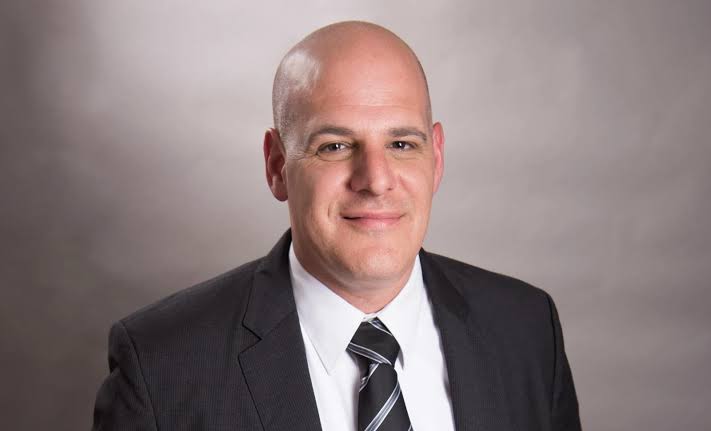
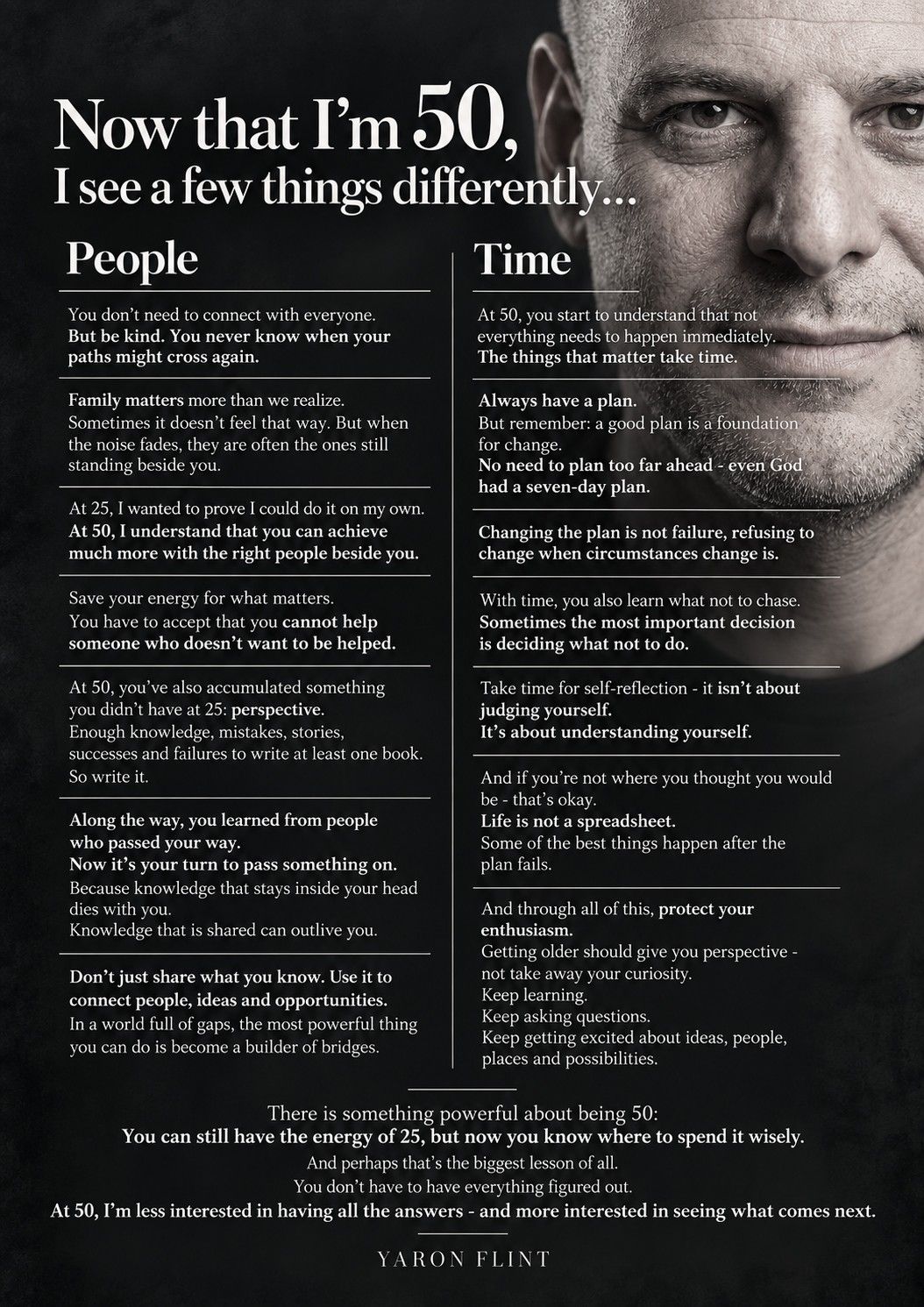
At 50, you see things differently. It's not because you have less energy, but because you have more perspective on where to invest it. This is precisely the point from which Yaron Flint, author of *Beyond Networking: Making Connections That Matter*, chose to begin when he sat down to write a personal reflection on what had changed for him in his fifth decade. Not general advice, but direct observations on people and time, as he himself articulated them.
On People: Carefully Choose Who You Give Your Time To
You don't need to connect with everyone, Yaron writes, but it's wise to treat the people around you well, because you never know when your paths might cross again. Family is more important than it might seem at any given moment, even when it doesn't feel that way. Most often, they are the ones who remain by your side when the noise subsides.
At 25, he wanted to prove he could do it alone. At 50, he realized that much more can be achieved with the right people by his side. This also led to the insight about energy: save it for what truly matters, and accept that you cannot help someone who doesn't want help.
Something else accumulates over the years that wasn't there at 25: perspective. Enough knowledge, mistakes, stories, successes, and failures to write at least one book. So you write it. And it doesn't end with writing.
What you've learned from people who have crossed your path, it's now your turn to pass on, because knowledge that stays with you disappears with you, but knowledge that is shared can live on after you. Not just sharing what you know, but using it to connect people, ideas, and opportunities. In a world full of divides, the most powerful thing you can do is become a bridge builder. This is precisely the same philosophy that Yaron details in his "Harvesters" method,
the patient construction of social capital that doesn't expect immediate returns.
On Time: A Plan is a Foundation, Not a Rigid Framework
At 50, you realize not everything needs to happen immediately. The things that truly matter take time. It's always good to have a plan, but a good plan is a foundation for change, not a limitation. There's no need to plan too far ahead; even God only had a seven-day plan.
Changing a plan is not a failure, Yaron writes. The refusal to change when circumstances shift is the real failure. With time, you also learn what not to pursue, and sometimes the most important decision is what not to do. It's crucial to take time for introspection, not to judge yourself, but to understand yourself.
And if you're not where you thought you'd be, that's okay. Life isn't an Excel spreadsheet. Some of the best things happen after a plan fails. And throughout it all, it's worth maintaining your enthusiasm. Age should provide perspective, not kill curiosity. It's important to keep learning, keep asking questions, and keep getting excited by ideas, people, places, and possibilities.
There's something powerful about being 50, Yaron concludes: you can still possess the energy of a 25-year-old, but now you know where to invest it most effectively. And perhaps that's the biggest lesson of all: not everything needs to be resolved. At 50, he's less interested in having all the answers and more in seeing what happens next.
Those who wish to continue the conversation with him are invited to connect with Yaron on LinkedIn, where he shares a monthly newsletter on innovation, strategy, and business development.
Questions and Answers
Why is changing a plan not considered a failure?
According to Yaron Flint, the real failure is the refusal to change when circumstances shift, not the change itself. A good plan is a foundation that allows for adaptation, not a rigid framework that must be adhered to at all costs.
What changes in the perception of energy at 50 compared to 25?
According to Yaron, energy doesn't necessarily decrease, but the knowledge of where to invest it improves. At 25, you try to prove you can do it alone; at 50, you realize you achieve more with the right people by your side and by focusing on what truly matters.