 Itamar Assaf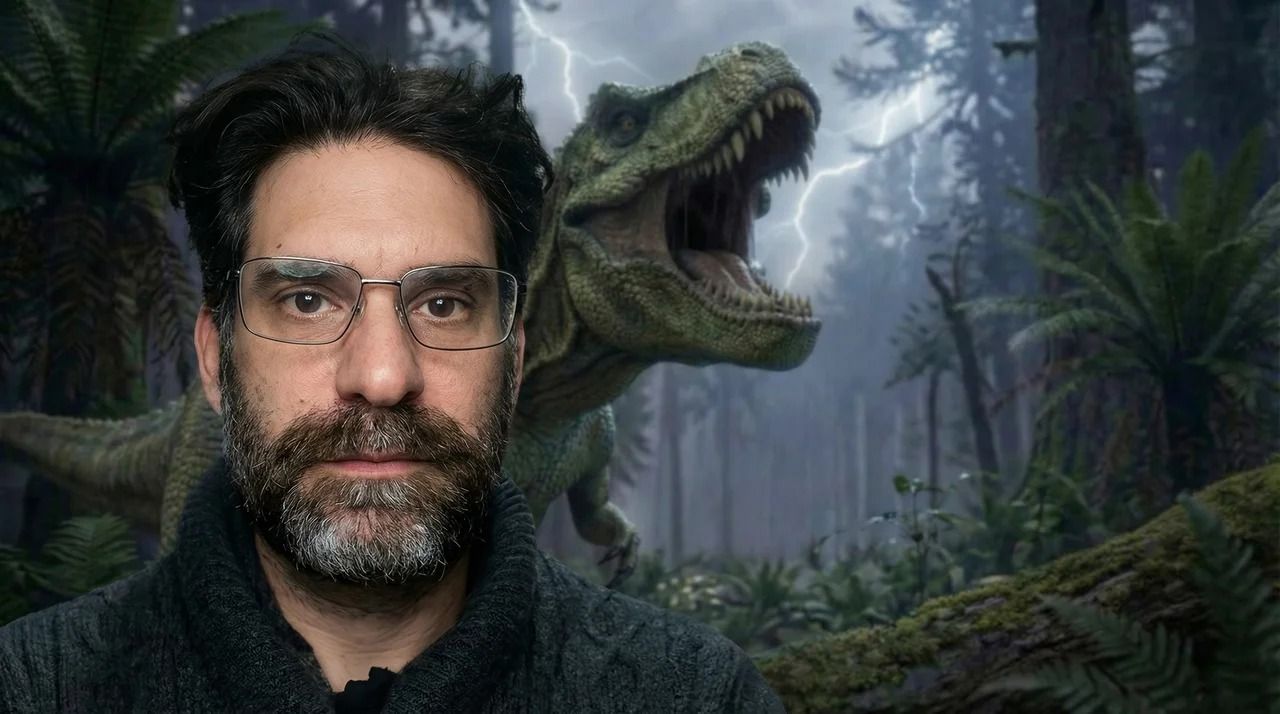
Almost everyone who has worked in television knows the feeling. The idea is written, it's good, and then it gets stuck. Not in the writing, but on the way: a channel executive, a budget, actors, directors, producers. Doron Tsur lived that for years. Today he works as a one-person AI studio: idea, directing, production and editing, all of it happens with him, from his computer at home.
He is an experienced screenwriter who started out in animation, and before that in comics, and of all his projects, "Shabas" is the one he enjoyed making most. That craft is exactly what he brings to the new tools.
From a Production Line to a One-Person AI Studio
"I'm a creative at Overwolf, and an AI video creator," is how he introduces himself. Starting out in animation made his connection to AI fast and natural, and the evolution he has gone through in recent years is, in his words, fairly extreme.
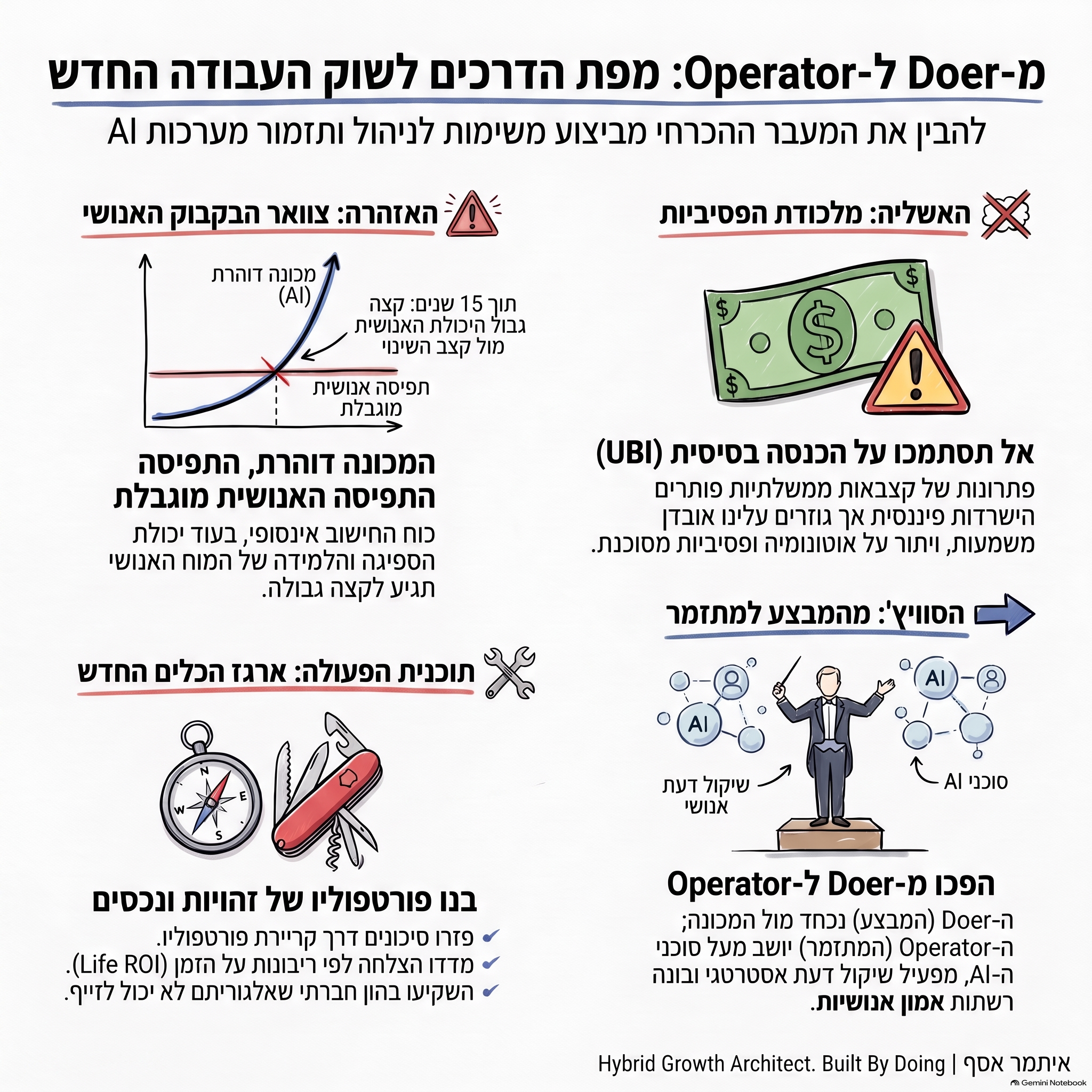
"I went from depending on a content production line to a situation where I'm basically the whole line," he says. "It's a shift from 'writer' to 'independent creator with the power of a team'." This is the move I describe as going from doer to orchestrator, the core of an AI orchestrator career. The value is no longer in executing one link, but in holding the entire chain.
The Bottleneck That Was Never the Writing
When I asked about the most frustrating barrier in the old production model, Doron didn't talk about budgets. "The most frustrating part was the pitching. Not the writing, which was always the fun part, and not the production." He met channel executives who approved projects based on what had worked on the competing channel a year earlier, or rejected ideas because the competitor had developed something on a similar general topic.
And it didn't end with the channels. "Actors, directors, producers, everyone has opinions, and you have to explain to all of them not only exactly what you want, but also why it's the right thing to do." On top of that, the budget: "You could write something excellent, but very often ideas just didn't happen because they were 'too complicated' to produce."
Today, he says, it's almost the opposite. "If I can imagine it, I can make it happen. No pitch, no dependence on anyone, and you don't even need to leave the house."
The Workflow: From Script to 15-Second Shots
Everything starts with an LLM, lately mostly Claude and its skills. For the script itself Doron uses no special skill, because he's an experienced screenwriter. He tells Claude his ideas and brainstorms with it until he reaches a script he loves, then breaks it down into shots.
AI video is generated in chunks of three to a maximum of 15 seconds. Every shot needs a start frame, and sometimes an end frame, all shots need to share one visual language, and recurring characters need to stay consistent. Every frame needs a prompt, and so does animating it in a video generator. "The important thing is to have a vision. If you know what you want to do, it's much easier to do it."
He doesn't write the prompts himself. "I'm a creative person, which means lazy and easily bored, so Claude writes all the prompts for me too." Claude already knows how he likes to work, the images and video are generated in Higgsfield, Fal or similar tools, and editing happens in traditional software, with sound and music that are also made with AI.
As someone who has led marketing teams at different companies, I can testify that producing a video like this used to start at thousands of dollars, at least. Watching what Doron produces alone today is watching an entire industry change shape.
Both-And: Why a Salaried Job in Tech
One audience question came from someone with a similar background, and roughly the same age: how do you get over the fear of moving from television to tech? The big difference between tech and TV, he says, is the continuity of the paycheck, and the fact that working at a company is a steadier channel than writing a project or a series. "And most importantly, in tech nobody asks me to dumb down my work because mediocrity sells."
On fear, he answered in one line: "Do scarier things as a hobby, it helps." And another: "I personally always believe in leaving the comfort zone and learning new things, it keeps me young and happy."
When asked whether he's happy being a both-and professional, and what he would have done differently ten years ago, he joked that he would have invested in NVIDIA. Then he answered seriously: "My career is made of a lot of adventures, twists and also a great many failures. Not everything was fun, but everything taught me, and brought me to this moment where my skills meet this insane progress. So no, I wouldn't change a thing."
Endless Junk, Endless Diamonds
The pace, he says, is dizzying. "In less than two years we went from being able to move a few images around to disturbing realism." Today he usually produces pieces of one to one and a half minutes, and the dream is full-length content, films and series, on his own. He is already planning a project like that. "The big question isn't when the models will be ready, but when we'll be able to tell the right story using them."
He won't predict the fate of the big production companies. About creators, he has a sharp answer: "We're heading, and fast, into an era where the cost of producing video at a quality that until recently was reserved for the big studios will be available to anyone for the price of a cup of coffee a day. When anyone can create any video, we'll see endless junk, but within the endless junk there will also be endless diamonds. The only difference between you and the rest of the world is your personal taste."
When any small agency can produce like a studio, the question moves from who has a budget to who has taste and vision. And on writing for short video, he gave practical advice: "If you're making AI video, don't rely on 'acting' to deliver the punchline, build on what AI does well. AI creates images of images, it has to serve your story."
What Doron Is Looking For From the Community
"Creating AI video is my passion and my obsession. Every project I do makes me a better professional, in a profession I'm helping to invent." His ask is simple: interesting collaborations that are challenging technically and creatively. If you're looking for video content that doesn't look generic, or you're just curious about what these tools can do today, Doron is open to a conversation. Write to him.