 Itamar Assaf
For my wife's birthday this year, I wanted to make something that captured the moments that actually mattered in our life together. Something no one else could give her, because no one else was there.
So I opened our WhatsApp archive. Nine years, from the day we met until today. 106,785 messages.
The idea was simple. Dive into all of it, find the moments that truly counted, and turn them into a small book you could hold in your hand. The problem: reading 106,785 messages on my own wasn't realistic. So I brought in Claude to help.
Step 1: mining the archive
I exported the entire history as a text file and asked Claude to go through all nine years and flag the messages that actually told a story. Not the "on my way home" texts, but the moments where one of us wrote something we truly meant.
The first pass came back as a list of messages sorted into seven chronological chapters: the beginning, the engagement, the wedding, the years in between, our first son's birth, our second son's birth, and up to today. 37 moments.
Step 2: the real messages, and a photo album unlike any other
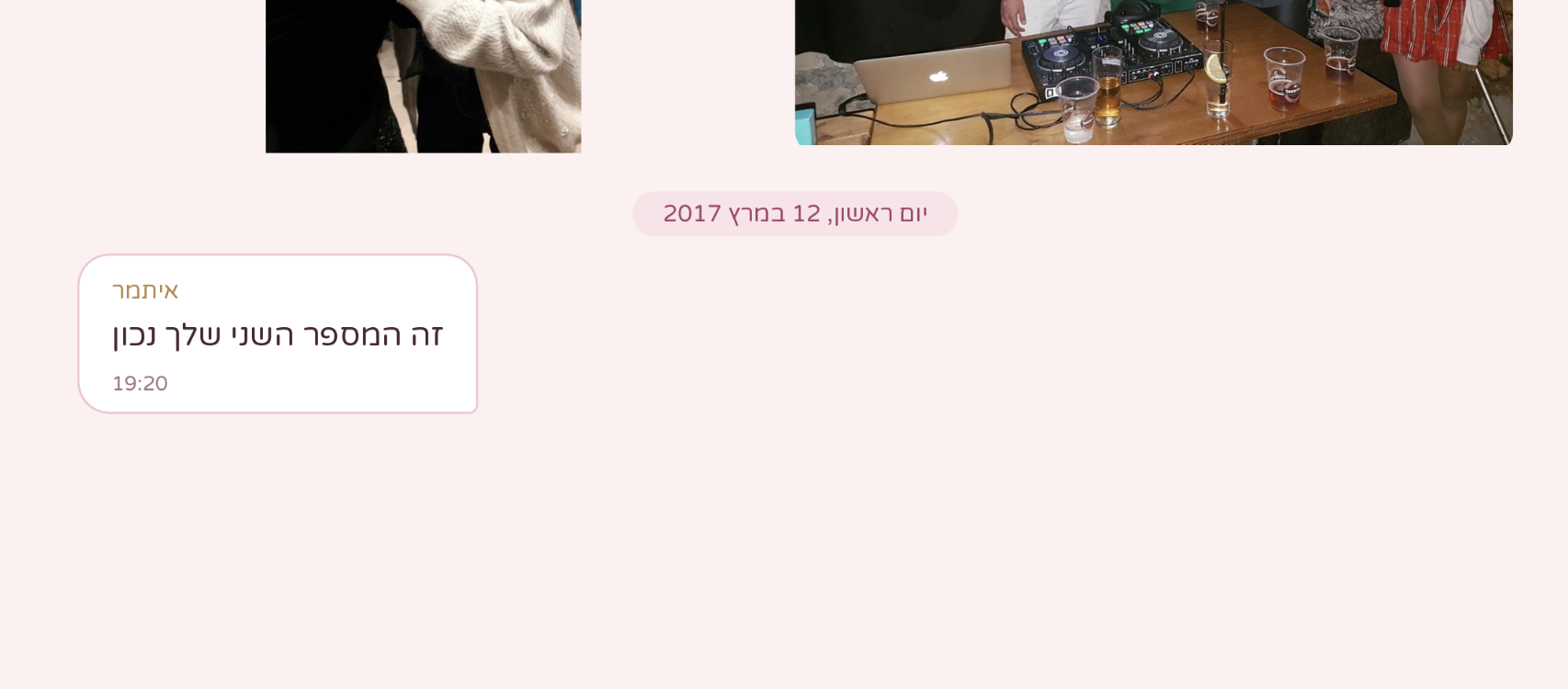
This was the turning point. The first draft looked nice, styled as "quotes," but it felt disconnected. So I asked for a redesign: every message as an actual WhatsApp bubble, with the exact time it was sent, the sender's name, and the real date pulled from the archive.
Suddenly it wasn't "a nice collection of quotes," it was real documentation.
You can see that one particular message went out at 10:26 in the morning, exactly as it looked on the phone screen back then. It also surfaced a mistake: one message tagged as belonging to the engagement was actually written later, my wife reflecting on the excitement in hindsight, not on the day itself. The fix was a clear distinction between when something happened and when the message was sent. Two separate things, both true.
Alongside the messages, I also wanted a photo album that felt personal, not a generic gallery. I tried giving the AI direct access to my Google Photos so it could find images on its own, and learned something important: there's a real gap between an AI "seeing" a photo in a browser and actually "using" that file. Two completely separate worlds, with no bridge between them.
The solution turned out to be the simplest one possible. I got a precise list of 37 dates to search for, went through Google Photos myself, and uploaded what I found, each photo placed next to its message, so every moment felt whole: words and image together.
Along the way a few nice surprises turned up, like discovering that a photo I thought was "just a landscape shot" was actually the moment of the actual proposal.
Step 3: the messages from my side
In the first version, most of the messages were my wife's. That made sense, in WhatsApp, women tend to write more long, expressive sentences. But it didn't tell the whole picture. I specifically asked Claude to look for meaningful messages I had written, and found 8 more, added them to the album, and now the book felt more balanced: two voices, not one.
Step 4: the design, translating personal taste into a layout
By this stage I no longer wanted a generic "gift template" look, I wanted something that felt like her. I gave Claude the color palette, the visual shape, the overall feeling that matched her taste, not mine. That changed the entire character of the book. Instead of a design that could suit anyone, I ended up with one that suited only her.
Step 5: from HTML to Claude Design
At a certain point I moved the whole project into Claude Design to shape it by hand, colors, headings, layout. This is where the careful editing began: fixing phrasing, cutting long dashes I didn't like, splitting headings that ran too long across two lines, smoothing out a sentence on the opening page that read awkwardly.
Ninety percent of the time on a project like this isn't spent creating the content, it's spent polishing it.
That's a stage I hadn't given nearly enough credit going in.
The final result
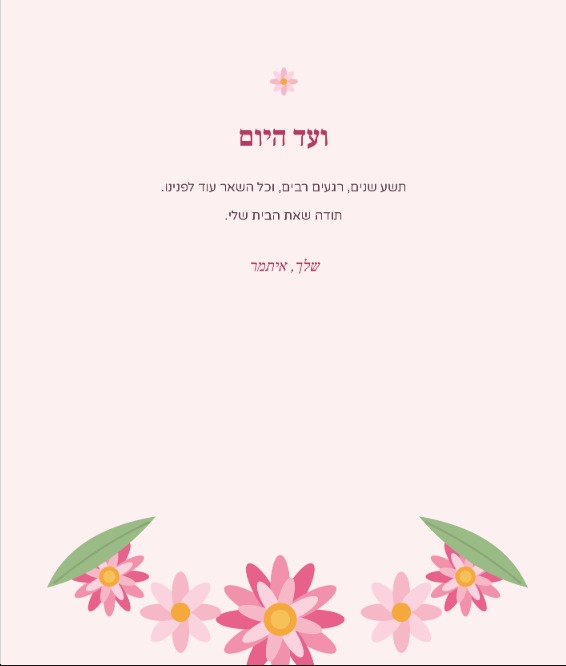
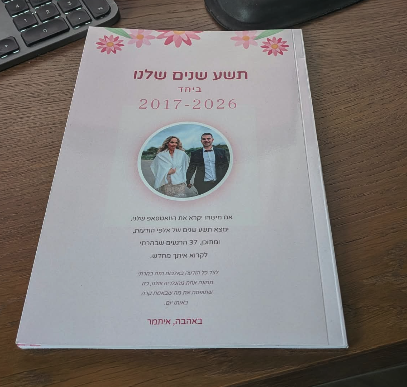
A small book of 37 real moments, spanning nine years, with real photos and real WhatsApp bubbles, down to the exact date and time of every message. Not a generic "ten years together" design, but an actual record of how two specific people talked to each other, day after day, for nine years.
What I learned
- AI is good at finding patterns, not at deciding what matters — I chose the 37 moments, not the algorithm. The AI just helped me see all the possibilities.
- Authenticity takes real work, not just good intentions — my first instinct was to "phrase it beautifully." I learned that the original, clumsy, real words are always stronger than any rewrite.
- The best tool is the one that admits when it isn't enough — the moment I stopped and said, "I genuinely can't access your photos," and asked for direct help, was the point the whole process moved fastest.
- The biggest moment in the process wasn't at the end, it was in the middle — sitting down and reading through 106,785 messages wasn't just curation work. It forced me to stop, to read, and to actually be present in the moments we built together over nine years, instead of rushing ahead to find the next message. That was the real surprise of the whole process, and if you're considering doing this yourself, it's the part I'd recommend most. Not because of how it turns out, but because of the road there.
Nine years of messages became 37 moments, and 37 moments became one book.
Want to build something like this? I put together a ready-to-use skill for the whole process. Click here to download.