 Itamar Assaf
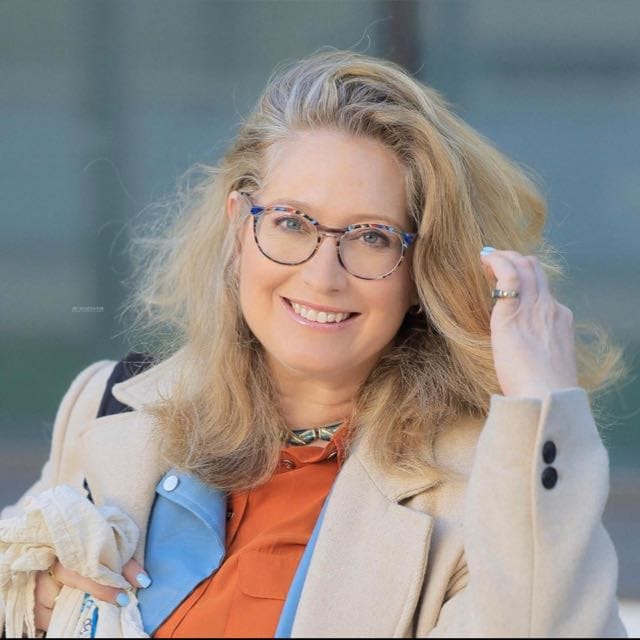
After five hard years of a PhD at Harvard, Dr. Yael Hadass came home to Israel to fulfill a childhood dream: working at Schocken Books. On her first day she was no longer a Harvard PhD. She was "Racheli's daughter."
"It was as if all the hard work I had done at Harvard was erased, and I was there only because I was her daughter," she says. It was deeply frustrating.
Her story is a lesson in building a portfolio career from an angle we rarely discuss. Not leaving a business to build several anchors, but building an independent professional identity inside a family business and alongside it.
A girl who wrote a school project about her family's publisher
Schocken Books was founded in Berlin in 1931 by her great-grandfather, Salman Schocken. Yael grew up with a publisher mother who passed on her love of books. As a child she read every single day, and in fifth grade she wrote a school project about Schocken.
"I always knew this was what I would do," she says. So she chose a BA in economics and English literature.
But economics took her somewhere she hadn't planned. The academic track ran all the way to a PhD in political economy and government at Harvard, and only at the end did she decide to come back and pursue the dream.
Racheli's daughter
The return was not gentle. The Schocken name carries great respect, and some people called her "Schocken" admiringly. But it made her uncomfortable, because the admiration came from previous generations, not from anything she had earned herself.
Working directly under her mother was hard too. "There were many times I thought about running away," she says. "Not because of the profession, which I fell in love with, but because working under your mother is an almost impossible challenge."
The advice she gives her own children today comes from exactly that place: work somewhere outside the family first, and build a separate professional identity.
How to build your own name when the family name is already on the door
Recognition as an independent professional came slowly, from three directions.
The first was fighting for books. Yael fought her mother over publishing books her mother didn't believe in, and they succeeded. The classic example is Yael Feder's series, whose best-known title, "My Body Is Mine Alone," is familiar today to almost every parent of a toddler.
The second was teaching. In academia nobody asks your last name. She had to succeed in front of a classroom regardless of the family reputation. Today she heads the international economics programs at Reichman University.
The third, and most important, was Economics for All (Kalkala Lakol). A venture she started from scratch during COVID to make economic knowledge accessible to the public.
The COVID moment
When COVID hit, she was troubled by a Bank of Israel policy that encouraged the public to defer mortgage payments, without explaining that people were effectively being sold a new loan.
She has known TV host Orly Vilnai since her teens. When she saw that Orly and Guy Meroz had started broadcasting from home, she offered to explain economic concepts on their channel, such as what deferring a loan really means.
It began as a weekly shoot with one of their producers and ended with Yael creating, hosting and producing the weekly show. A morning-show segment in which she proved to Guy that deferring his mortgage would cost him new interest payments went viral. Two of the episodes she produced were posted on the Bank of Israel website.
That also gave birth to a course that, to the best of her knowledge, isn't taught anywhere else in Israel: an academic course in financial literacy where all the content is research-based. It took her time to convince Reichman to offer it. Today students write in their feedback that it is the most important course at the university, because it prepares them for life. This year she even received an email from a student's father saying how glad he was that his daughter was taking such a course.
A portfolio career where every world feeds the others
Today Yael is a hybrid professional in every sense: managing director of Schocken Books, head of international programs and lecturer at Reichman, founder of Economics for All and creator of the Future Economist podcast. We call this a portfolio career.
The best example of how these worlds feed each other came from a family vacation in Paris. Her son, a comics fan who knows his mother always talks about economics, found a comic book about economics at a Fnac store and brought it to her.
She immediately saw something special: the entire history of economic thought, everything taught in a bachelor's degree, without math and fully illustrated. Exactly what she believes in. Schocken bought the Hebrew rights, and despite a hard and expensive translation and production process, "Economics in Comics" became a steady seller that keeps going back to print.
The economist in her works inside the publisher too. She entered the industry at the height of the Tzomet Sfarim and Steimatzky duopoly, and felt firsthand what it means to be a producer squeezed between two giants. "Many publishers price books based on what others do," she says. "I price based on what makes economic sense to cover costs and profit on the book."
What she did give up
The anchor holding it all together, she says, is her love of creating quality content that genuinely contributes to the public: a gorgeous children's book, a course that passes on knowledge it took years to gather, a podcast episode with students.
Still, she has already given something up. She stopped marketing lectures to the general public and now lectures only in a limited number of places, when invited. "The load simply wasn't healthy." That is Life ROI in practice: not every opportunity is worth its price.
In reality, she admits, everything collides all the time. What saves her is her phone, WhatsApp and email, and the dozens of people she is in touch with every day: students, authors, journalists, the publishing team and Reichman's administration.
What a publisher tells anyone dreaming of writing a book
Here Yael brings the dream down to earth. According to her, about 8,000 new books are published in Israel every year, and most barely earn back their investment. Occasionally there is a runaway success, like "Investing for the Lazy," but on average a book at best covers its costs.
"You don't write for the money, you write to put content out there that you want people to read." A professional publisher provides quality production and access to bookstores, many of which reject self-published books, because the publisher is the signal that a book is good.
Three things she wants every first-time author to know:
- Who the book is for, and why it's worth their money and time. If you can't answer that, the publisher won't understand why to invest in you either.
- Language and delivery matter as much as content. Most manuscripts are rejected for poor writing, even when the story is excellent.
- The competition is like getting cast in a Hollywood movie. Be as professional and polished as you can. And if you're not accepted, you can publish on your own.
If you're wondering how to fit writing a book into a career, read the story of a lawyer who became an author alongside his litigation practice.
And what about your money
For most of our community, people aged 35 to 55 considering going independent or combining a salaried job with freelance work, she has a simple answer. Going independent means being ready for income volatility, because a security situation or an economic crisis immediately affects demand.
The first thing is an emergency fund that can carry you for several months. The second is a real business plan for the first year: where income will come from each month, and what expenses to expect for operations, advertising and marketing. And anyone taking a loan needs an orderly repayment plan for different income scenarios.
The mistake research proves most clearly? People buy when the market rises and sell when it falls, and lose money over time.
What Yael is looking for from the community
On the Economics for All website, Yael offers workshops for children, teens, young adults after the army and anyone interested in money. They received excellent feedback and became digital courses, but she has no time to market them.
She is looking for partnerships with websites and platforms that market to the general public. And if you're looking for a good book for any age, she invites you to browse the Schocken Books website.
More conversations like this one: all interviews and articles from the Lost in Y blog.