 Itamar Assaf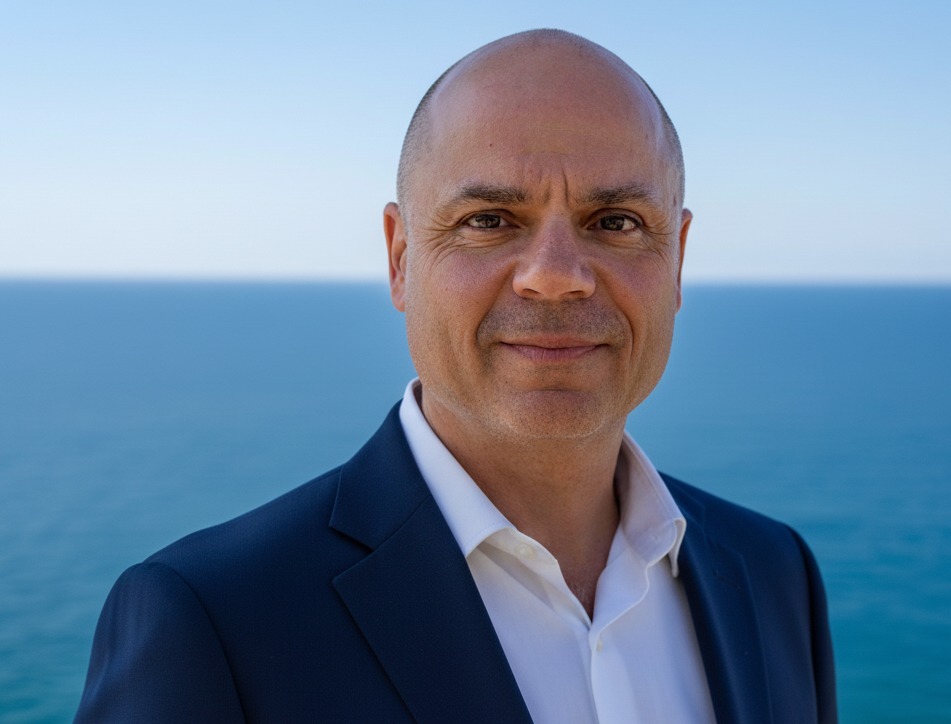
A researcher who publishes a breakthrough in the prestigious journal Nature at 30 and sells technology to Pfizer finds himself, years later, facing his mother's cancer diagnosis. That's where he learns that theoretical science, however brilliant, will never save a life without a careful strategy for commercialization and market access.
This is the story of Dr. Etgar Levy-Nissenbaum (52). His path is a fascinating one, moving between the world's most prestigious research labs (Harvard and MIT) and major pharma and biotech companies (former Deputy CTO at Teva and SVP at Lycored).
The double surname, incidentally, he carries out of respect: his mother Emilia was an only child, and when her father passed away, Etgar and his three siblings added the name "Nissenbaum" to make sure the family line wouldn't disappear.
In a candid interview, Etgar breaks down his move from academia to the boardroom, explains the barriers in the world of oncology, and describes how, in his sixth decade of life, he chose to break out of the "golden cage" to build a portfolio career that leverages multidisciplinary knowledge (a "both-and" approach).
Sports, Academia, and the First Breakthrough
Etgar grew up in a household that combined excellence in management and architecture alongside competitive sports (basketball, tennis, and swimming), which gave him a diverse toolkit for problem-solving. "From basketball I learned that no challenge is solved alone, and from tennis I learned to make decisions under pressure," he shares.
At 30, he led a groundbreaking genetic study published as lead author in Nature. The research identified the genetic cause of a rare and severe childhood hair-loss disease, and enabled, for the first time anywhere, prenatal diagnosis of the condition. "The real satisfaction was the applied impact: giving those families a certainty and hope they never had before," he recounts.
The MIT Dilemma: Cutting From Academia to Industry
Despite offers to stay on a fast-tracked academic path to a professorship at Harvard under Prof. Robert Langer (a co-founder of Moderna), Etgar chose to leave for industry. "My compass was always applied," he explains. "For all the beauty of basic research, my inner drive is to take science - and turn it into a drug that reaches the patient's bedside."
Working alongside Langer taught him a lesson in humility ("a scientist worth millions who shows up every morning with the passion of a young researcher") and the importance of "thinking big" - not wasting time on small problems. Beyond that, Langer shattered for him the notion that academia and money don't mix; breakthrough science needs a healthy economic model to reach patients.
According to him, the move from scientist to senior pharma executive required a deep psychological shift: "I had to let go of the emotional attachment to research. A scientist tends to fall in love with an idea. As a senior executive, I learned to look at the full picture: complex regulation, manufacturing barriers, and cost of goods (COGs). Deciding to stop an 'elegant' project because it has no real market takes managerial courage."
Personal Crisis and Collision With the System (The Fight for Mom)
At the height of his career, Etgar's mother, Emilia, was diagnosed with an aggressive cancer. As the son of a mother who had refused to give up on him during a pregnancy against all odds, he decided not to give up on her. In a sharp shift from a researcher analyzing statistics to a caregiving son, Etgar went into "autopilot": he mobilized every connection he had in the US with cancer centers (like MD Anderson and Dana-Farber) and fought to obtain an experimental Roche/Genentech drug. His mother became the first patient in Israel to receive the treatment, which gave her far more meaningful, extended quality time than the prognosis had suggested.
That harrowing experience showed him just how much cumbersome medical systems leave the patient alone, and how much early detection and personalized medicine (such as BioConvergence, where biology meets AI) are the real keys to fighting cancer in the coming decade. "I saw how the cumbersome systems leave the patient alone, and how much 'proximity to the table' determines survival odds."
Breaking the "Golden Cage" and Planning a Career at 50+
When he crossed 50, Etgar made a dramatic decision: to stop the day-to-day race as a C-level executive at corporations, in favor of a portfolio-career model. In a rapidly changing job market, where the high-tech and pharma industries no longer offer the employment security of the past, Etgar realized that many senior executives fall into the "overqualified trap" or suffer forced early attrition from the market.
He identifies the central strategic mistake senior executives make at the peak of their careers: "The mistake is not stopping!"
"Many executives get trapped inside a 'golden cage.' The senior salary, the bonuses, and the sense of power create an addictive inertia. The mistake is continuing to run on autopilot just because the track is comfortable, instead of asking, 'Am I still driven by passion?'"
Today, Etgar's "both-and" portfolio is varied and fascinating: he advises growth-stage startups, consults for investment committees, and serves as a board member for ventures such as machine-learning technology for skin diagnostics. "In the world of BioConvergence, versatility is the strongest weapon. You can't lead a digital-health product if you only understand code, or only biology." Etgar stopped measuring himself (Life ROI) through dependence on a single employer, and moved to building economic resilience through diversification and broad impact: "A hundred percent focus in a single organization with one income source was replaced, for me, by advising groundbreaking ventures in parallel. It's a combination of professional freedom, constant intellectual interest, and real impact."
Rapid-Fire With Dr. Etgar Levy-Nissenbaum
A principle from the world of sports for the boardroom: "Nobody wins a game alone (unless your name is LeBron James). Victory depends on management's ability to play as a team."
A "red flag" in a medical startup investment: On the human level - a team with egos that can't work together in a crisis. On the strategic level - founders who fall in love only with the technology and are blind to regulatory barriers and reimbursement hurdles.
What he's looking for in the community today: connecting dots and advising growth-stage startups, and funds/investors looking to identify "red flags" or opportunities in their portfolio.