 Itamar Assaf
It all starts with setting expectations: why do startups fail?
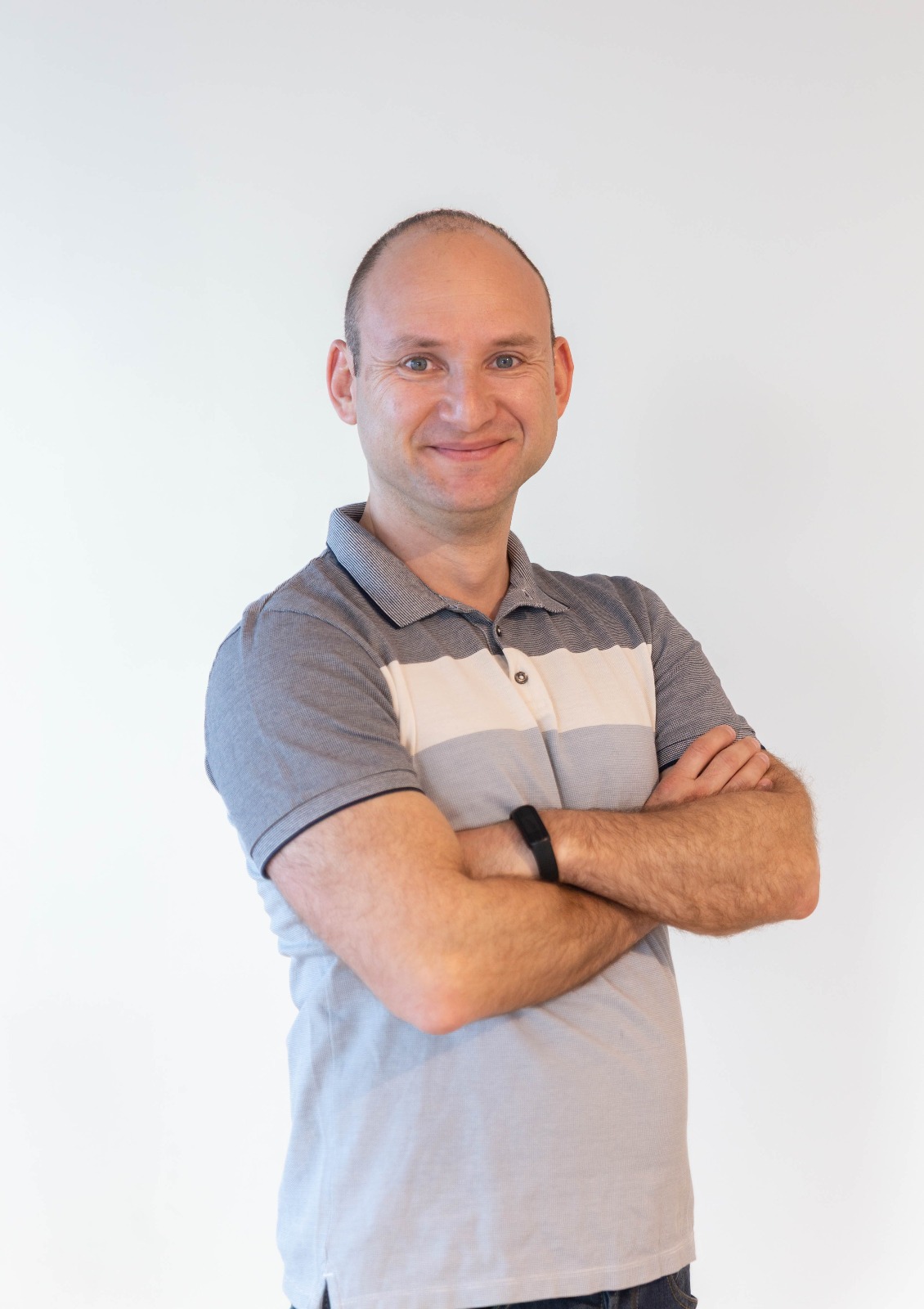
Arik watched Clicktale grow from zero into a company of hundreds of employees with massive funding rounds. From that experience, he identifies a recurring pattern among entrepreneurs just starting out: trying to raise money too early.
"There are entrepreneurs who try to raise money before they've exhausted their own ability to grow traction and establish product-market fit (PMF)," he explains. "Today it's easier than ever to spin up an MVP and do market research using AI. Anyone who's lazy or cuts corners won't manage to raise, or will raise on bad terms. And if you can avoid raising at all, that's even better."
And when I asked him why excellent tech projects collapse on the ground, his answer brought us back to basic human factors: a problem of clarity and expectations. "When a client rushes to start development before a proper spec has been done, I already know there will be overruns in time and cost. That said, AI tools today give a lot more flexibility to rewrite parts from scratch at a much lower cost."
The AI revolution: the key to developer independence
As someone who's lived code and development for over two decades, Arik sees the arrival of AI tools as a genuine revolution, but one that doesn't eliminate the need for human experience, it actually expands its boundaries.
"Developers today wear several hats, translating requirements into architecture, implementing in code, and testing the product. AI writes code excellently, but at the other stages the combination of human and machine still produces the best results. The big advantage is range: if I have a high-level understanding, AI can write code for me in an environment I don't know. Suddenly a backend person can do frontend, and that dramatically increases their independence."
DIY culture, and the cloud trap
Some of Arik's main interests today include smart homes and maker culture. He describes a fundamental shift in software business models: in the past, companies sold licenses; today the economic value has shifted to services around the software (cloud and support).
"That's produced better products, but also an incentive to add cloud dependency or a subscription model even when it's not technologically necessary (a phenomenon called enshittification). 'Do it yourself' (DIY) culture gives us alternatives and tools to build what we want independently. In an era of open source and AI, that's an ability that constitutes a huge advantage."
Mentoring and Kiyosaki: the small entrepreneur's bottleneck
Beyond development, Arik volunteers extensively as a mentor to entrepreneurs (at "Ogen" and "Ahrytech"). He identifies that the bottleneck for small entrepreneurs is the difficulty of switching between hats in the business.
"Early on, the entrepreneur fills every role. The most important challenge is self-honesty: where am I weak? What do I hate doing? A lot of entrepreneurs stay in their comfort zone and neglect critical areas. The solution is to find partners or employees who complement you."
Regarding the move from the "employee" quadrant to the "owner" quadrant (per Kiyosaki's model), Arik stresses there's no single right path for everyone: "It's easier to adapt the path to the person than the person to the path. You don't have to own a business to build assets, an employee with discipline and long-term investments can build wealth too. Owning a business demands additional abilities that don't suit everyone. In a world of constant uncertainty, the single most important trait is simply the ability to adapt."
Facing the physical world (IoT): how can we collaborate?
A decade ago, Arik decided he wanted to have more of an impact on the physical world, and shifted his focus to IoT (the internet of things), electronics, hardware, and embedded systems.
"I work on products that measure, move, play, grow food, and interact in the real world, under constraints of size, energy, and cost," he shares. Arik is looking to connect with entrepreneurs, companies, and organizations dealing with complex hardware and software challenges (from companies that need technical guidance to organizations with a unique need that has no existing market solution). "Worst case, we'll just have an interesting conversation," he sums up.
Lightning round:
The most important trait for an entrepreneur right now: the ability to adapt.
The craziest DIY project you've built at home: measuring water-heater temperature to estimate how many hot showers are left, and a project for cooling water for the bed.
If you weren't an entrepreneur and tech consultant, you'd be: a scientist or a doctor.
One tip for 18-year-old Arik: keep trying. Experience comes from attempts.
Do you have a complex tech challenge that needs a combination of software and hardware? Looking for advice on IoT? Feel free to connect with Arik Yavilevich through our community or reach out directly via LinkedIn.
This interview is part of a series of conversations with members of the Lost in Y founders & leaders community.
More conversations like this one: all interviews and articles from the Lost in Y blog.