 Itamar Assaf
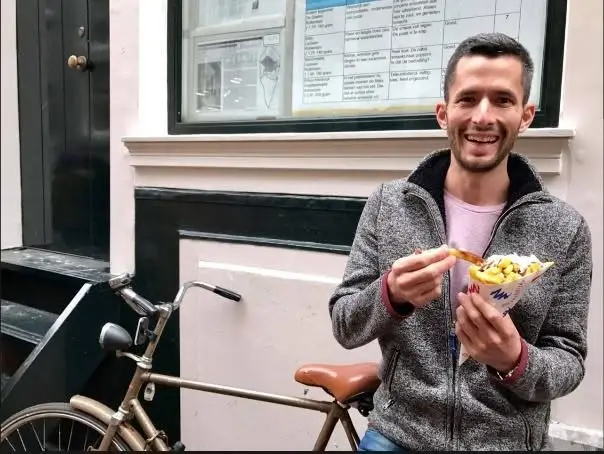
The usual startup story goes something like this: save up, resign at the right moment, raise money from investors, and only then jump. None of that happened to Amir Gilboa. He was laid off in a round of cuts, and that was exactly when he decided to start a company.
Today RVN is a stable AdTech company that started bootstrapped and grew mostly by word of mouth. This is a story about building a bootstrapped startup in Israel, and about the difference between fear that freezes you and fear that moves you.
Thrown Into Deep Water, No Life Jacket
Amir is 38, lives in Herzliya, married with two daughters. When he needs to clear his head and there's no time for football, a run or a workout, he plays chess on Chess.com and listens to a lot of music.
The moment he left wasn't a dramatic showdown with a boss. "Fate had it that I was thrown into deep water," as he puts it. "I always knew I wanted to be independent," he says. "To be honest, it turned out I was laid off as part of cuts at the company I worked for, and at that moment I knew that if it didn't happen now, it would never happen. The fear that it would never happen was bigger than the fear of the unknown."
He doesn't deny the fear of failure, even today. "You can't let it paralyze you, it has to drive you." His wife, who backed him 1000 percent in his words, gave him a huge tailwind and peace of mind, and only one option stayed in his head: success. The worst case? "I'd look for a salaried job and meanwhile be a Wolt courier. I'll do everything to provide for my family."
Three Tips for Anyone Still Sitting in a Golden Cage
If you're waiting for the moment leaving feels safe, you'll wait a long time. Amir doesn't sell illusions. Asked by an audience member whether the move pays off in salary, he said: "There's no certainty, and there were quite a few months when I didn't take a salary. You have to be ready for that financially, and of course with your family too."
His first tip: partners. "A must, and probably the most important choice in building the business." A partner lifts you and complements you, professionally and mentally, through failures, long days, illness, a sliding dollar and payments that don't arrive on time. In the rapid-fire round, asked whether partners should be friends, his answer was "Yes!"
His second tip: get into a founder's mindset while you're still employed. Market research, feasibility checks, pricing, interviews with potential customers. "The more you manage to do and learn while you have financial certainty, the easier it will be once you jump in." And the third: "You don't need an idea that will change the world to start. Do well what you already know, and use the people you know as much as possible."
What RVN Does, in Words Your Grandmother Would Understand
"Behind every ad you see on One, Mako, Candy Crush, there's a whole world happening behind the scenes in real time," Amir explains. RVN developed an Ad Server that connects websites and apps (Publishers) with advertisers and agencies (Advertisers), so the ad reaches the user's device as fast and as profitably as possible. They also run the same product internally, managing campaigns for other companies with it. "We managed to create an (almost) complete ecosystem."
How does a small Israeli team compete in a market dominated by giants? "In one word: technology." Publishers fear their app will slow down because of ads, advertisers fear bloated infrastructure costs. If you're not efficient for both sides, you don't survive for long.
Growth came mostly by word of mouth, deal after deal on both sides of the industry. Size is a decision too: "I believe a large team in such a volatile, seasonal industry is more dead weight than a force multiplier."
Building a Bootstrapped Startup: Every Decision Comes Out of Your Pocket
With no fund behind you, every mistake comes straight out of your pocket. Amir admits the pressure is there, and as long as it isn't too intense, it drives him. "The fact that we depend on ourselves changes decision-making on almost every level: taking risks, hiring, responsibility."
One moment stayed with him. An employee they hired told him a second after signing: "But no nonsense, right?" Meaning, don't shut the company down a week after I start. "That really stayed with me, because I understood the size of our responsibility and the trust he was placing in us." And about the mistakes themselves: "That's the most efficient tuition there is."
What's hardest about building without investors? "You're the junior, you're the CEO, you're the bookkeeper, you go over contracts, you're the salesperson, the product person, the QA person, you're everything."
Hiring Without a Fund or Shiny Offices
How do you convince good people to join a small company when giants are making tempting offers? Part of the answer is the story itself. "Some people are really drawn to the story of a small, dynamic company. I'm one of them. I got lost in big companies with complex procedures."
The other part is who you hire. "We tried to hire only people we know or through recommendations. Even the recruiter we work with is someone who helped me find a job in my previous life." Yaron Flint calls this, in his book Beyond Networking, the difference between miners and harvesters. Amir didn't dig into his contacts when he needed something, he harvested relationships planted years earlier.
At the Start There Is No Balance, and Salaried Quiet Is the Big Fear
I asked him what he would tell the Amir of the early days to be more balanced. The answer was the opposite of what I expected. "At the start there is no balance. If you're not 200% on it, something didn't connect inside. There's no letting go, only fighting." There were evenings he fell asleep with the laptop on the couch, woke up at 2 a.m., sent two or three emails because the market is mainly in the US, and went back to sleep.
And yet, when he explains why independence, he doesn't start with money: "Beyond the financial potential, the dimension of time and family matters most to me in being independent." That's Life ROI in a founder's version: a high price at the start, to buy control over time later on. And he doesn't miss the paycheck: "Today, the quiet of a salaried job is my biggest fear. If there are no cash-flow worries for the company when you're employed, there are cash-flow worries for the family." The thrill of the first $10 that came in over the first two days, he says, doesn't compare at all to the thrill of today's numbers.
He talks about the job market in terms of an industrial revolution. Employees, developers, lawyers and doctors, need to amplify their abilities with AI, and for founders the waters are stormy: great ideas become replaceable within months. "On the other hand, it's also a crazy opportunity, because the barriers to entry are dropping significantly in almost every field." For AdTech in 2026 he expects consolidation: "Whoever survives will come out stronger." And for anyone still sitting on the fence: "Sitting on the fence is a great song. Make a plan and get going!"
What Amir Is Looking For From the Community
The business is stable today, so Amir isn't asking for clients or funding. What he wants from the Lost in Y community is non-trivial connections: ones relevant to the digital advertising world, and also ones from outside it, "because I'm curious by nature." If you sit on one side of the market he connects, a website, an app, an advertiser or an agency, or you have a surprising connection from a completely different field, send him one message this week.
Want the idea behind these stories? Read portfolio career: what it is, who it fits and how to start.