 Itamar Assaf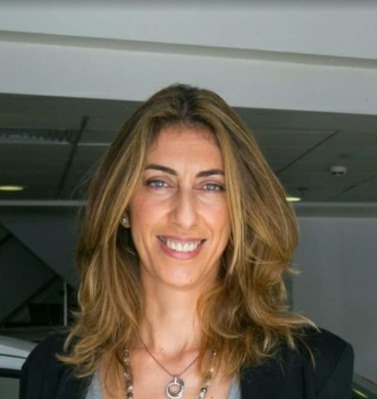
While many talk about innovation and artificial intelligence from beautifully designed offices, some executives meet technology where it meets the asphalt. Vered Mane, a Business Transformation Leader, took the toughest possible path: growing from the field to the most senior executive seats in the heavy vehicle, public transportation, and logistics industries.
Today, she leads growth processes that connect traditional industries with AI and data solutions. In a fascinating interview for the community, Vered dismantled some of the biggest myths of today's job market: from glass ceilings, through ageism, to the illusion of "innovation theater."
Here are the key insights from her journey.
1. Breaking Into the "Boys' Club" With Results, Not Battles
For most of her career, Vered found herself the only woman at the executive table in traditional, male-dominated industries. Her approach to handling that reality differs from the common narrative:
Results build trust: Professionalism, consistency, and the ability to execute open far more doors than any attempt to "fight" for a seat at the table.
Diversity as a business tool: Diversity isn't just a social agenda, it's a critical business advantage. Leadership made up of people from different backgrounds and ways of thinking simply makes better, more profitable decisions.
The "hard work" trap: Early in her career, Vered believed hard work would speak for itself, which led her to neglect building a professional network. Over the years, that view changed: hard work is necessary but not sufficient. Real networking isn't about asking for help, it's about creating mutual value that acts as a significant force multiplier.
2. The "Ageism" Illusion and the Overqualified Trap
Today's job market tends to worship speed and technological novelty, which creates real anxiety among executives 40 and older. Vered offers a different perspective, based on one key line: "Experience is expensive... until you pay for inexperience."
The market may fall in love with what's new, but in moments of crisis, uncertainty, and the need for complex decisions, organizations look for someone who has already proven they can deliver.
How do you handle the "overqualified" label?
The secret isn't to sell titles or "how much I did in the past," but to focus the conversation on solving problems. An experienced executive needs to explain which crises they know how to solve and what practical value they bring to the organization. It's also important to signal to the organization that personal goals change over time: you're not always looking for the next promotion - sometimes you're looking to make a deep impact in a specific professional niche.
3. From Innovation Theater to Impact: AI Without a Business Pain Point Is a Toy
Vered's move from classic operations into the worlds of AI and mobility isn't, in her eyes, a sharp "pivot," but a natural evolution. Taking twenty years of business understanding, operations, and analytical ability and applying them to new technology - that's the real competitive advantage.
The fuel is the data: Everyone talks about AI engines, but few talk about the quality of the "fuel" that feeds them - the data. Without quality, historical, and consistent data, artificial intelligence can't produce good insights or decisions.
A champion inside the organization: For innovation not to stay in a drawer, there has to be an internal "champion" who takes the insights from the system and puts them into action.
4. Winning Crises With Simple KPIs
In managing operationally heavy crises, the truth usually isn't found in the stories people tell, but in the numbers. Vered notes that the gap between what people think is happening on the ground and what the data shows is enormous.
The solution lies in choosing simple, clear success metrics (KPIs). When there's systematic measurement, a healthy organizational dynamic emerges: everyone is looking at the same truth, and no one wants to be left behind.
The bottom line: Vered's journey proves that even in the most traditional and toughest industries, executives who bring a combination of curiosity (asking "why"), business understanding, command of data, and building human relationships are the ones who will survive every technological revolution and keep creating impact.