 Itamar Assaf
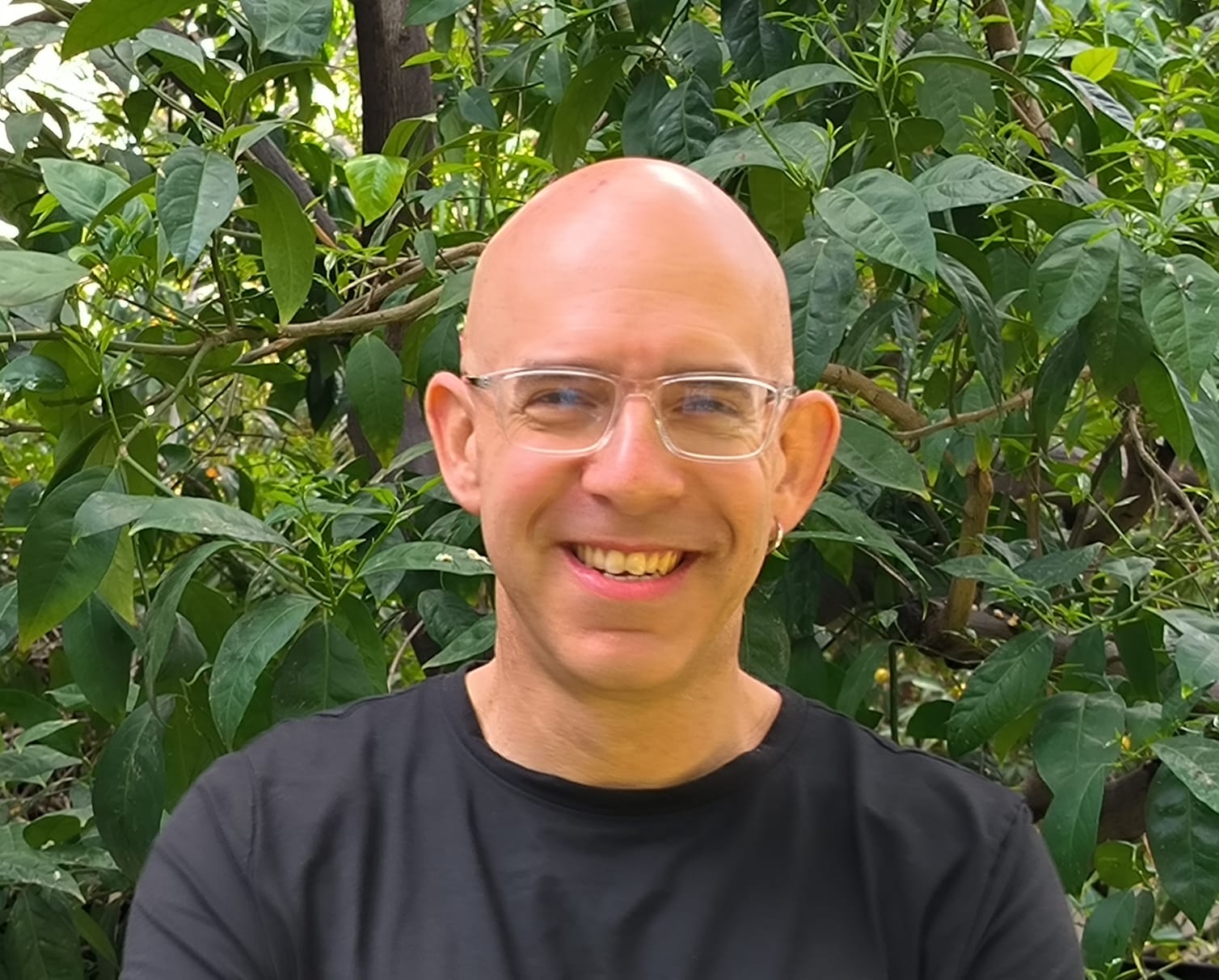
Senior roles in large organizations, private and public. Places most people would mark as the safe last stop. Moshe Panzer was there, and at some point realized he was sitting in a golden cage: interesting most of the time, comfortable, and still too small for him.
He left, tried to raise money from investors, failed, and put in his own money. Since then he has been building software companies without outside capital. The common assumption is that people leave a role like that out of burnout or a sudden epiphany. For Moshe, it was neither.
Leaving the Golden Cage Without Drama or Burnout
Moshe Panzer, 51, from Rishon LeZion, married with five children, started as a programmer, became a software architect and VP Products, and worked and managed in diverse settings, from small companies to large private and public organizations, in Israel and abroad. A BSc in information systems engineering from the Technion, and an MSc in information systems management from Clark University in the US.
When I asked what made him get up and go, the answer was quieter than I expected: "There was no single dramatic moment, but it wasn't burnout either. In the senior roles I held, it was interesting most of the time, and still I had this feeling of 'I can do so much more with my abilities and knowledge.'" He knew that if he didn't move, he would find himself in the same place a few years later.
"I preferred risk with meaning over comfort and (imagined) security," he says, "and I also believed that if I built something with real value, someone would pay for it." That word in parentheses, imagined, is the whole story. The security of a single employer looks stable from the inside, right up until it stops being stable.
Bootstrap Not by Ideology, but by Investors Saying No
Here comes the part most founders don't tell. "I'd be happy to say that not raising money was the ideology, but that's not really true," Moshe admits. "I really wanted to raise money, but I couldn't convince investors to put their money on an idea in information security and behavioral profile analysis, a field that at the time seemed too far-fetched to them."
So he put in his own money, equity and bank loans, with high leverage and under significant financial pressure. That pressure forced him to go to market early, listen to customers and sell, "to build a real business, not a slide deck." Once the company started bringing in revenue, investor interest became less relevant.
The companies he has founded since, all self-funded, work in areas like enterprise system connectivity, financial regulation and community management. Today he is CEO of one of the companies, a pre-seed and seed investor, a mentor to young founders and active in several social ventures.
He doesn't sell the model as a fairy tale. Bootstrapped companies usually hit a glass ceiling on expansion, because there is always cash-flow pressure, so in his view you need to define size, market and end game in advance, and work backward. The sentence worth hanging over every founder's desk: "A bootstrapped company is easy to start, very hard to sustain, and even harder to sell."
Was it the right decision? "Yes, but with an asterisk." The freedom let him build companies true to his values and vision, but there were junctures where the lack of outside capital delayed significant moves.
Hiring Musicians, Farmers and Literature Graduates Into Tech
The part of the conversation that fascinated me most was Moshe wearing his employer hat. Over the years he has hired people from backgrounds far from classic tech: agriculture, music, literature. "A programmer who also founded and ran a music school understands the customer's point of view better, and a product manager with a degree in English literature brings a different level of thinking."
Here too he doesn't dress it up: not every hire worked out. But in many cases it created real added value, especially working with customers and partners in the US, Europe and India. "Combining knowledge from different fields is an advantage you can't replace with code," he says, and that is exactly the logic of a portfolio career, seen from the hiring side.
Then we got to the elephant in the room: a full-time employee who does freelance projects on the side. Moshe says this is a question managers have to make a clear-cut decision on, and he runs into it with colleagues, candidates and employees. His decision is clear: "If an employee meets their targets, is committed to the company and is transparent with me about it, I have no problem."
In his view, in most cases it actually signals entrepreneurship, responsibility and a drive to do more, and if it's a social project, it's even welcome. "The challenge is trust and boundaries, not the doing itself."
AI Replaces Roles, Not People
"For me, AI doesn't replace people, it replaces roles." Today Moshe looks for people who know how to think, learn fast and use AI as a force multiplier. "Fewer 'task executors', more dot-connectors."
This is the shift from doer to operator, phrased by an employer. When tools change at dizzying speed, the asset isn't the tool but the ability to pick the right one. In the lightning round, asked which AI tool saves him the most time, he answered: "Depends on the situation, of course. Choosing the tool is the core skill."
The same principle runs his own management. He doesn't believe in micromanagement, but in working with excellent people who define their own tasks and pace, which is how he operates on several fronts without losing focus. His definition of a good manager: "A manager who lets people use their abilities to run forward."
The Age-40 Crisis in Tech: Move Now
On the age-40 crisis, Moshe answered most sharply: "If you think you can do more, you have to take the step and move now, especially in this period." The daily threat of AI and automation to jobs creates, in his words, a permanent state of employment instability, and precisely there lies an opportunity for talented people to step out.
What keeps people in place, according to Moshe, is uncertainty. The more you reduce it, and take the steps with an experienced advisor, the easier it becomes to move. And this isn't just advice for others: asked about his biggest business mistake, he answered, "Thinking I knew it all alone, and not getting the right guidance."
Even in an era when founders say "you don't need investors, you have AI," he advises bootstrapped founders to build themselves an advisory board of experienced mentors, preferably ones with skin in the game. Cash crunches, constant pressure and managerial loneliness don't disappear because of a new tool.
And to himself, he repeats again and again a line his kids learned in kindergarten: "Patience, patience, you can't buy it in any store." The strength, he says, is in persistence and determination. And one detail you wouldn't guess: Moshe plays the didgeridoo, and if he weren't a tech founder, he'd probably be a pastry chef or a motorcycle racer. He holds a heavy motorcycle license.
What Moshe Is Looking For From the Community
The biggest lesson Moshe took from an exit is that you sell in order to leverage what you built for more people, and so that the best people will want to work with you next time. That is exactly where his ask comes from.
He is looking to hear from determined founders with something early-stage in software, young or experienced, who are looking for a partner in thinking, experience or connections that can take a good idea to execution and turn a small operation into a significant international company. "Collaborations where 1+1 really equals 3." If that's you, now is the time to write to him.
Want the idea behind these stories? Read portfolio career: what it is, who it fits and how to start.